
Planning a kitchen renovation can feel exciting at first, then quickly turn confusing. Some people love the modern look of an open kitchen, while others prefer a closed kitchen that’s easier to keep clean.
For many Malaysian families, cooking is a daily routine with strong spices and heavy frying, so the kitchen needs to be practical, not just pretty.
Choosing between open and closed kitchen designs is really about your cooking habits, cleaning style, and how you use your space every day.
What Is an Open Kitchen?

An open kitchen is a layout where the kitchen connects directly to the dining or living area without full walls separating the spaces.
This design is very common in:
- Modern condos
- New landed homes
- Small apartments
- Contemporary home renovations
Many homeowners like open kitchens because they make the house feel larger, brighter and more connected.
Open Kitchen Reality: What It Really Means in Daily Family Life
An open kitchen utilizes a “no fourth wall” philosophy to integrate seamlessly with living areas, requiring materials that act as furniture-grade finishes.
Pros (Social & Spatial) | Cons (Environmental & Aesthetic) |
Spatial Expansion: Eliminates barriers, allowing spaces to flow; essential for making urban apartments feel significantly larger. | Acoustic Percolation: High-decibel appliance noise (blenders, dishwashers) spreads throughout the connected living areas. |
Social Connectivity: Facilitates bonding and guest interaction while preparing meals, creating a friendly, informal ambiance. | Thermal Spread: Heat and steam generated during heavy cooking spread rapidly to adjacent rooms without a containment barrier. |
Collaborative Workflow: Accommodates multiple cooks simultaneously, making it the ideal choice for multi-generational joint families. | Storage Limitations: The “no fourth wall” impact significantly reduces the available vertical surface area for high-density cabinetry. |
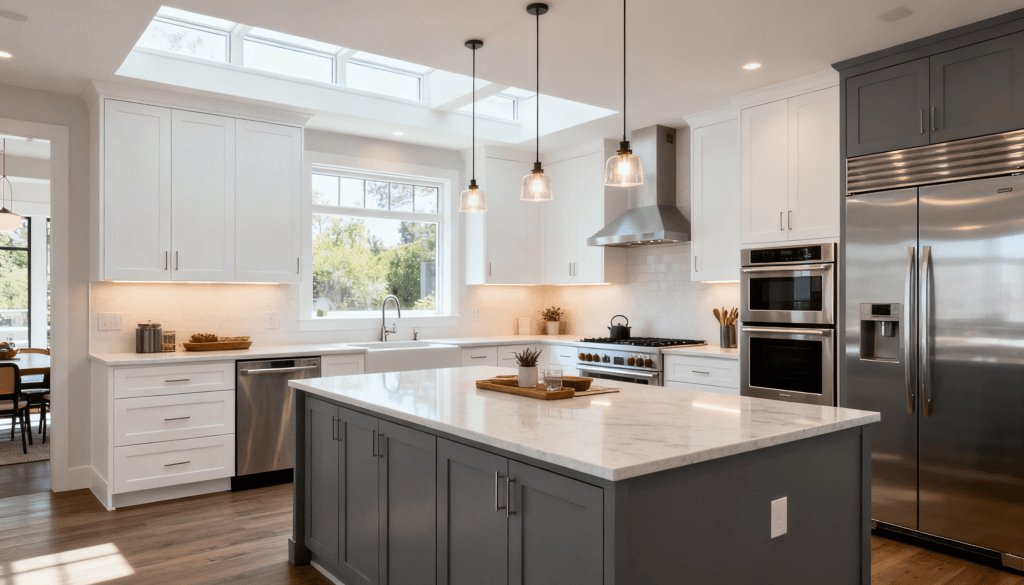
What Is a Closed Kitchen?
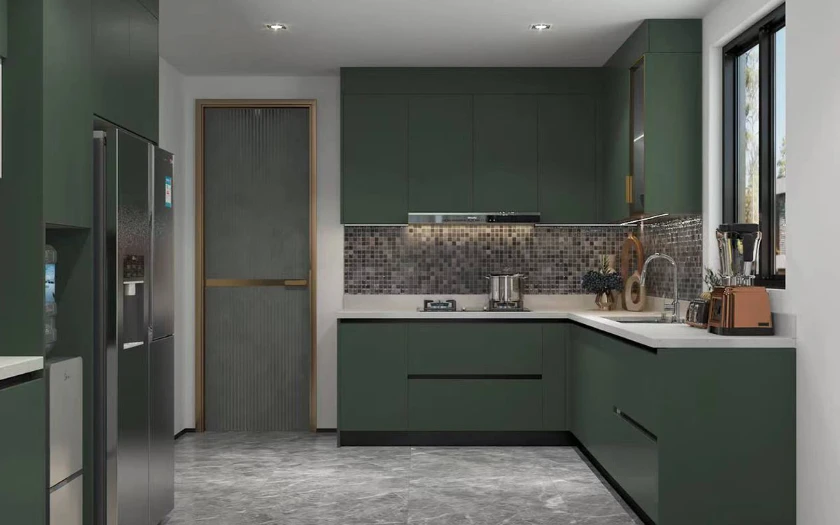
Image Credit: OPPOLIA
A closed kitchen is separated from the living and dining area using walls or doors.
This traditional layout is still very common in Malaysian homes because it offers more privacy and better control over cooking mess.
Closed Kitchen Reality: How It Works in Real Malaysian Homes
A closed kitchen acts as a private sanctuary, prioritizing containment and functional density over social transparency.
Pros (Functional & Private) | Cons (Social & Psychological) |
Total Containment: Effectively confines pungent fumes, oils, and loud operational noises within a traditional four-wall boundary. | Social Isolation: Creates a sense of formality that can lead to the cook feeling isolated from family activities. |
Procrastinated Tidying: Hidden from the rest of the house, allowing homeowners to delay cleanup without impacting the home’s visual order. | Reduced Sight Lines: In typical Johor terrace or apartment setups, internal walls can make the overall floor plan feel constricted. |
Storage Optimization: Four full walls provide the maximum possible surface area for ceiling-height cabinetry and specialized storage. | Access Friction: Prevents a seamless transition between the prep zone and the dining area, complicating service flow. |
Open Kitchen vs Closed Kitchen: Which Is Better?
Here is a simple comparison to help homeowners decide.
Feature | Open Kitchen | Closed Kitchen |
Space Appearance | More spacious | More enclosed |
Cooking Smell Control | Lower | Better |
Cleaning Pressure | Higher | Easier |
Family Interaction | Better | More private |
Noise Control | Lower | Better |
Heavy Cooking Suitability | Moderate | Excellent |
Best For | Small homes, light cooking | Daily heavy cooking |
Things to Think Before Choosing Your Kitchen Layout
Before you decide between an open kitchen or closed kitchen, think about how your family really lives every day.
A kitchen is not just design. It affects cooking comfort, cleaning workload and even how your house feels daily.
1. How Often Do You Cook?
This is the most important question. If your cooking is simple, like:
- Air fryer meals
- Light breakfast
- Occasional cooking
- Less frying and strong spices
Then an open kitchen can work well. It feels bright, modern and easy to interact with family while cooking.
But if your home involves daily Malaysian cooking like:
- Frying fish
- Sambal tumis
- Curry dishes
- Stir-fry with garlic and onion
- Heavy dinner preparation
Then a closed kitchen is usually more practical. Strong smells, oil and smoke are easier to control when the kitchen is separated.
2. Is Your Home Small or Spacious?
Space changes everything when planning your kitchen.
An open kitchen works best for smaller homes like condos or compact spaces. It helps the house feel bigger, brighter, and more connected. Without walls, the space feels less cramped, especially when natural light is limited.
A closed kitchen or wet-dry kitchen is better for larger landed homes. It gives you proper separation for heavy cooking, keeps smells and mess away from the living area, and makes it more comfortable when you have guests.
Many Malaysian homes now go for a mixed setup, a dry kitchen for light cooking and hosting, and a wet kitchen for frying and heavy cooking.
3. Do You Often Have Guests at Home?
If your house is always full of people, open kitchen can feel very nice.
It allows:
- Cooking while chatting with guests
- Better social interaction
- More “together” feeling during gatherings
When cooking strong Malaysian food, you may face:
- Smell spreading to living room
- Visible kitchen mess during events
- Less privacy while preparing food
Some home design guides also highlight that open kitchens need stronger odour control because smells travel faster into shared spaces without barriers.
4. Are You Ok With Cleaning Often?
This one is very real in daily life. Open kitchens require more discipline because everything is visible.
You will need to manage:
- Dirty dishes immediately
- Countertop mess
- Cooking splashes
- Overall kitchen appearance
Even small mess can make the whole living area look untidy. Closed kitchens are more forgiving. You can cook freely and clean later without worrying about guests seeing everything.
Experts on home layouts also mention that open kitchens require more consistent cleaning because cooking particles and grease can spread into connected living spaces.
Flexible Ways to Pay for Your Kitchen Renovation
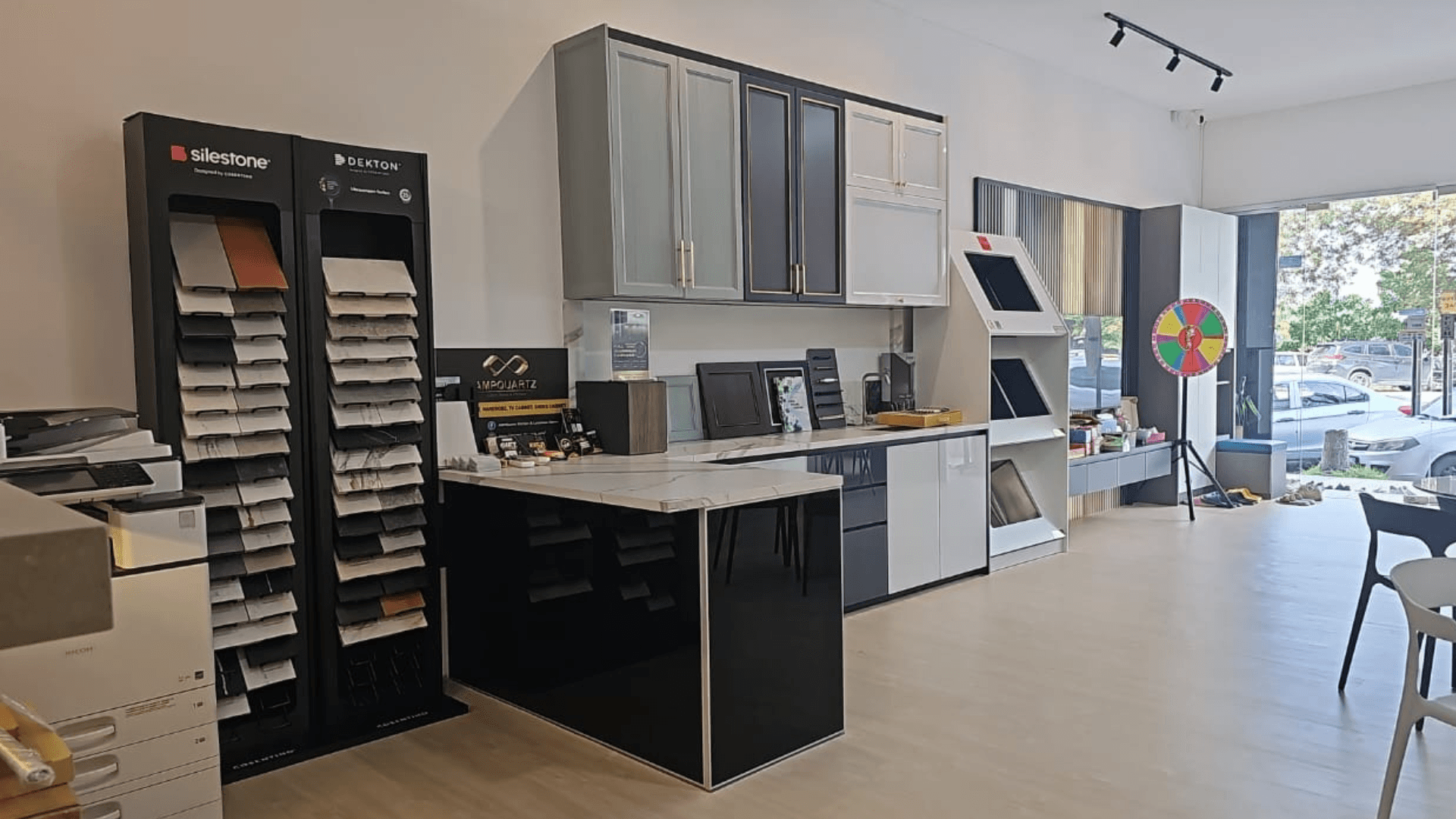
AmpQuartz makes it easier for homeowners to start their kitchen renovation without heavy upfront pressure. Selected kitchen packages come with flexible payment support to suit different budgets.
For eligible packages, customers can enjoy a 24-month 0% instalment plan, subject to bank approval. This allows you to spread your payment over time without paying extra interest.
For larger renovation projects, renovation loan options are also available, with financing support of up to RM300,000 for qualified homeowners, depending on bank assessment and approval.
So, What’s the Best Kitchen Style for Your Home?
Choosing between an open kitchen and a closed kitchen depends on your lifestyle, cooking habits and family needs.
Open kitchens offer a spacious and modern feel, while closed kitchens provide better practicality for heavy Malaysian cooking.
For many Malaysian families, combining a dry kitchen and wet kitchen gives the best balance between style and functionality.
At the end of the day, the best kitchen is not the trendiest one. It is the one that makes daily family life easier and more comfortable.