It’s 9:47pm in a new Johor home.
The boxes are still half-unpacked. The kids are finally asleep. And you’re standing in an empty kitchen that looks “nice” on paper… but your brain is already running the scary movie trailer:
-
Where will the wok cooking happen?
-
Will the whole living room smell like sambal belacan?
-
If we do an open concept, will grease end up on the sofa?
-
If we do a wet kitchen behind, will it feel cramped and ugly?
-
And if we choose the wrong cabinets, will humidity + termites + daily abuse destroy them in 3–5 years?
This is exactly why wet kitchen and dry kitchen planning matters. In Johor, it’s not a “trend”. It’s a practical way to protect your home, your routine, and your sanity.
This guide is built to help you rank your decisions—not just your kitchen photos. And yes: we’ll answer the FAQs people in Johor ask right before they pay a deposit.
Get Cabinet Quote ( In 24 Hours )
What Is a Wet Kitchen and Dry Kitchen (In Real Life, Not Catalog Life)
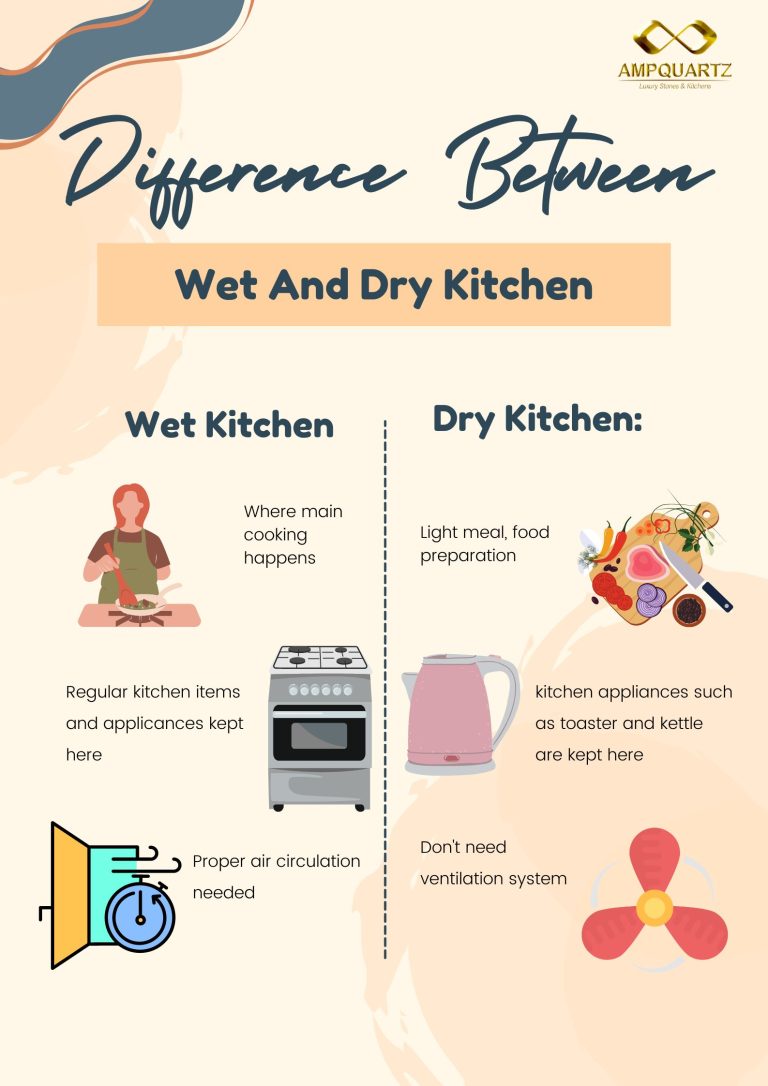
Wet kitchen = the “battle kitchen”.
It’s where the heat, steam, oil, and strong smells live: stir-fry, deep-fry, curry, grilling, heavy washing, intense prep.
Dry kitchen = the “front kitchen”.
It’s where life happens: coffee, breakfast, plating, serving, snacks, hosting, and that moment where your friends lean on the counter and start talking.
A good wet kitchen and dry kitchen setup keeps your home feeling clean and calm without asking you to cook like a minimalist influencer.
Why Wet Kitchen and Dry Kitchen Fits Johor Homes So Well
Few realities that design needs to respect:
1) We cook “real food” (which means oil, steam, and spice)
If you cook often, having a clearly defined wet zone acts like a protective buffer for your dry zone. It helps contain grease drift, splatter, and lingering food smells so they don’t settle onto clean surfaces or drift into living areas. A well‑managed wet zone also keeps cleanup centralized, which means less wiping down and fewer messes spreading throughout the rest of your kitchen.
To make this even more effective, try building habits that reinforce the separation between zones. Run your vent hood for several minutes before and after cooking so grease and odor get pulled toward the wet zone instead of drifting outward. Keep stronger‑smelling ingredients—like garlic, onions, and fish sauces—stored and prepped closer to the wet zone so their aromas stay contained. Using simple mats or trays by the stove and sink helps catch drips and splatter before they reach your dry zone. It also helps to keep a small trash or compost bin in the wet zone so food scraps stay where the mess belongs.
Your organization plays a role as well. Store heat‑resistant utensils, cutting boards, and daily cooking tools near the stove, while keeping serving pieces and dry pantry items in the dry zone to preserve that clean, open feeling.
Wiping down the wet zone right after cooking—just a quick reset—prevents sticky buildup that might otherwise spread. And if you frequently host, maintaining this separation keeps the dry zone presentable for guests while the wet zone quietly handles all the behind‑the‑scenes chaos.
2) Our climate punishes the wrong materials
Malaysia’s climate is known for high relative humidity throughout the year. MetMalaysia notes relative humidity commonly ranges roughly 80% to 88% depending on period/location. (met.gov.my)
Humidity is not a small issue when cabinets sit beside daily steam, wet floors, and mopping.
3) Pests are not a rare story
Termites are a real risk in tropical regions; research literature frequently highlights how serious termite infestation can be in Southeast Asia and cites high infestation figures in parts of the region. (ScienceDirect)
Even if you’ve never had termites, your neighbour’s problem can become your problem.
So when Johor homeowners ask, “Do we need wet and dry kitchen?” the honest answer is:
If you cook often and want your living space to stay fresh, wet kitchen and dry kitchen is usually the easiest way to win.
Get Cabinet Quote ( In 24 Hours )
The Biggest Mistake: Designing Wet Kitchen and Dry Kitchen Like Two Separate Projects
Many renovations fail because homeowners treat wet and dry as two unrelated spaces:
-
different contractors
-
mismatched heights
-
awkward walkway
-
power points in the wrong places
-
a door that blocks drawers
-
a hood that looks strong… but doesn’t catch the smoke
A good setup is one system: workflow, ventilation, storage, cleaning, and materials designed together.
Get Cabinet Quote ( In 24 Hours )
Here’s the simple framework we use with homeowners.
The Johor “No-Regret” Framework: 5 Decisions Before You Choose Anything
Decision 1: What kind of cook are you?
Be honest—because your layout should serve your real life.
-
Daily heavy cook (wok, frying, boiling, steaming) → wet kitchen needs strong ventilation, splash protection, hardwearing cabinets, and easy-clean surfaces
-
Weekend cook + weekday quick meals → wet kitchen can be compact; dry kitchen becomes the social + prep space
-
Entertainer (open house, friends, family gatherings) → dry kitchen must be welcoming, bright, and connected to dining/living
Decision 2: Where does mess naturally happen?
Most people underestimate “mess zones”:
-
near stove
-
near sink
-
near the chopping area
-
the “landing zone” where groceries get dumped
-
the “Milo spill zone” (you know the one)
Your wet kitchen should absorb the mess. Your dry kitchen should stay easy.
Decision 3: How will air move?
Ventilation is not a luxury in a wet kitchen and dry kitchen setup—it’s your insurance policy.
A useful rule-of-thumb often shared by appliance retailers is choosing a hood based on air changes per hour and kitchen volume. (myappliances.co.uk)
And you’ll also find mainstream hood specs in Malaysia reaching around 1200 m³/hr for higher extraction models. (Electrolux Malaysia)
What this means in practice:
-
If you do heavy cooking, don’t treat hood choice like a decoration.
-
Plan ducting early so it vents properly, not “somehow later”.
Decision 4: Where will storage actually be used?
Storage isn’t “how many cabinets.” It’s how fast you can put things away.
Wet kitchen storage should focus on:
-
pots, pans, wok, oil, spices, rice, heavy items
Dry kitchen storage should focus on: -
plates, cups, serving ware, snacks, breakfast items, small appliances
Decision 5: What materials survive Johor life?
A cabinet that looks okay today can become a regret later if it can’t handle:
-
humidity
-
mopping water
-
splashes
-
pests
-
daily opening/closing
-
children pulling on doors
-
long-term warping and swelling risks
This is where “cheap may be expensive” becomes painfully true.
Layout Ideas That Work for Wet Kitchen and Dry Kitchen in Johor
1) Terrace house classic: Dry kitchen front + wet kitchen at the back
Best for: families who cook daily
Why it works: smells stay near the back; dry kitchen stays guest-friendly
Key detail: ensure the walkway between zones is clear and doesn’t clash with swinging doors or drawers
2) Semi-open partition: Glass sliding door / half-wall
Best for: homeowners who want openness but hate grease
Why it works: you keep light and space, but block smoke and noise
Key detail: choose door/partition positions that don’t block cabinet access
3) Apartment-friendly “two-zone” kitchen
Best for: condos with limited footprint
Why it works: you still separate “mess” and “display” zones using smart layout and targeted materials
Key detail: even if you can’t build a full wet kitchen, you can build a wet zone.
The AmpQuartz Way: Why We’re Different from Traditional Carpenters
Most homeowners don’t fear cabinets.
They fear the process:
-
“Who is actually in charge?”
-
“If something goes wrong, who fixes it?”
-
“Will the final result match what we imagined?”
-
“Are we about to pay twice because of mistakes?”
Traditional carpentry jobs often focus on fabrication first. The weak point is usually planning + coordination + long-term support.
Get Cabinet Quote ( In 24 Hours )
With AmpQuartz, you’re not just buying cabinets — you’re buying a guided system
1) Design help that reduces decision fatigue
Many homeowners know what they dislike, but can’t visualize what will work.
That’s why we provide free 3D drawings—so you can see the wet kitchen and dry kitchen layout before you commit. (AmpQuartz)
2) Ideas that fit Johor living (not just Pinterest)
A wet kitchen in Johor needs different priorities than a show kitchen in a cold climate. We plan around your cooking style, cleaning habits, and family movement.
3) Planning + project management so work doesn’t drag
A kitchen renovation is a coordination job: measurements, appliances, power points, plumbing allowances, ventilation path, and installation timing.
When planning is weak, homeowners pay in:
- delays
- rework
- “extra charges”
- stress
4) Material choices that match your risk level
Instead of one standard approach, we offer wide material choices—including solutions suited for humidity and daily wet-zone abuse. (AmpQuartz)
5) Trustworthy support + warranties (not disappear-after-install)
A kitchen is used every day. Hinges, runners, alignment, and finishing matter over time. We’re built around after-sales support and clear responsibility, so you’re not left chasing multiple parties.
6) Cost savings through smarter payment planning
Renovation stress often peaks when homeowners must pay everything upfront while also buying appliances, lighting, and moving costs. AmpQuartz offers 24-month 0% installment plans to help you manage cash flow without sacrificing quality. (AmpQuartz)
“Don’t Focus on Price”… But Let’s Talk Value Ranges Honestly
A customized kitchen cabinet project in Johor can vary widely depending on:
-
size (linear feet / full height)
-
materials
-
internal accessories
-
countertop and backsplash choices
-
number of zones (wet kitchen and dry kitchen vs single kitchen)
A sensible way to think about it:
-
Entry-level customized work (basic finishes, fewer accessories)
-
Mid-range (better hardware, better finishes, smarter internal storage)
-
High-end (premium finishes, integrated lighting, more complex detailing)
The real warning is this:
Cheap may be expensive when you account for swelling, warping, termite risk, repeated repairs, and redoing the whole kitchen earlier than planned.
If you’re planning to stay in your home for years, build for the life you’ll actually live.
A Simple Next Step (10–20 Minutes) If You’re Planning Now
Tonight, do this quick exercise:
-
Write down the top 5 things that annoy you about your current kitchen (or your parents’ kitchen).
-
Circle the ones caused by mess, smell, storage, and workflow.
-
That circle becomes the blueprint for your wet kitchen and dry kitchen zones.
Because the goal isn’t “a beautiful kitchen”.
ing the cheapest decision today. (AmpQuartz)
Get Cabinet Quote ( In 24 Hours )
For Wet Kitchens:
-
Floor-to-ceiling storage: Maximizes vertical space for large cookware and appliances
-
Pull-out systems: Provides easy access to deep cabinets
-
Open shelving: Offers quick access to frequently used items
-
Heavy-duty drawers: Supports the weight of pots, pans, and cooking equipment
For Dry Kitchens:
-
Glass-front cabinets: Displays attractive dishware while protecting from dust
-
Hidden storage: Conceals small appliances when not in use
-
Integrated appliance housing: Creates a seamless, built-in look
-
Decorative elements: Incorporates design features that complement living spaces
Innovative cabinet design solutions can double your storage capacity without expanding the footprint. A study of kitchen renovations in Johor found that homeowners who invested in custom cabinet solutions reported a 40% increase in usable storage space compared to standard cabinet installations.
Selecting the Perfect Wet Kitchen Cabinet Materials
Materials for your wet kitchen cabinet should prioritize moisture resistance and durability. The wet kitchen environment presents unique challenges that require careful material selection:
Material Comparison for Wet Kitchens
|
Material |
Moisture Resistance |
Durability |
Maintenance |
Cost Range (RM) |
|---|---|---|---|---|
|
Aluminium |
Excellent |
High |
Low |
13,500 – 15,000+ |
|
Solid Wood with Sealant |
Good |
Medium |
High |
10,000 – 20,000 |
|
Marine Plywood |
Very Good |
Good |
Medium |
8,000 – 12,000 |
|
Stainless Steel |
Excellent |
High |
Medium |
15,000 – 25,000 |
|
Melamine |
Fair |
Medium |
Medium |
3,000 – 7,500 |
Aluminium wet kitchen cabinet options provide superior resistance to humidity and pests. This is particularly important in Johor’s climate, where the average annual humidity exceeds 80%, creating challenging conditions for kitchen cabinetry.
A 2024 study of kitchen cabinet durability in Malaysia found that aluminium cabinets maintained 95% of their structural integrity after 5 years in wet kitchen environments, compared to just 60% for standard wood cabinets without proper treatment.
Stylish Dry Kitchen Cabinet Ideas for Open Concept Homes
While wet kitchens prioritize function, dry kitchens balance functionality with aesthetics. Since your dry kitchen is often visible from living and dining areas, cabinet design becomes a crucial element of your home’s interior design.
Popular Dry Kitchen Cabinet Styles in Johor:
-
Minimalist: Clean lines, handleless designs, neutral colors
-
Contemporary: Mixed materials, geometric patterns, bold accents
-
Scandinavian: Light woods, white finishes, simple hardware
-
Industrial: Metal elements, open shelving, utilitarian features
-
Traditional Malaysian: Wood tones, carved details, cultural motifs
Custom cabinet design allows for personalization based on your specific cooking needs. According to interior designers in Johor, 72% of homeowners now request some form of customization in their dry kitchen cabinets, with storage solutions tailored to specific cooking and entertaining habits.
Comparing Kitchen Cabinet Materials for Malaysian Climate
The most popular kitchen cabinet materials in Johor include aluminum, solid wood, and melamine. Each offers distinct advantages and considerations:
Material Performance in Malaysian Conditions
|
Feature |
Traditional Wood Cabinets |
|
|---|---|---|
|
Durability in Humidity |
Excellent |
Poor to Fair |
|
Maintenance |
Low (occasional wiping) |
High (regular sealing/treatment) |
|
Pest Resistance |
Complete |
Vulnerable |
|
Heat Resistance |
High |
Medium to Low |
|
Customization |
Multiple options |
Limited by material |
|
Lifespan |
15-20+ years |
5-10 years (without treatment) |
Choosing the right kitchen cabinet materials is crucial in Malaysia’s humid climate. The average kitchen renovation in Johor costs between RM20,000 to RM50,000, with cabinets typically accounting for 40-60% of this budget. Investing in quality materials upfront can significantly reduce long-term maintenance costs.
Premium kitchen cabinet materials can increase your home’s resale value significantly. Real estate data shows that homes with high-quality kitchen cabinets sell for an average of RM30,000 more than comparable properties with basic cabinet installations.
Practical Layout Considerations for Wet and Dry Kitchens
The layout of your wet and dry kitchen spaces significantly impacts workflow efficiency and overall satisfaction. Consider these practical design principles:
Optimal Connections Between Spaces
-
Direct Access: Ensure easy movement between wet and dry kitchens
-
Logical Flow: Arrange workspaces to support your cooking process
-
Visual Connection: Consider partial openings or glass elements
-
Buffer Zone: Create a transition area to prevent moisture transfer
Space Requirements
For comfortable functionality, industry standards recommend:
-
Wet Kitchen: Minimum 8-10 square meters
-
Dry Kitchen: Minimum 6-8 square meters
-
Circulation Space: At least 1 meter between counters
-
Door Width: Minimum 80cm for easy movement with dishes
A survey of Johor homeowners found that 65% wished they had allocated more space to their wet kitchen during renovation, highlighting the importance of proper planning before construction begins.
Storage Solutions That Maximize Your Kitchen Efficiency
Effective storage is essential for maintaining organization in both kitchen zones. Consider these specialized solutions:
Wet Kitchen Storage Essentials
-
Pot and Pan Organizers: Vertical dividers or hanging systems
-
Utensil Dividers: Compartmentalized drawers for cooking tools
-
Spice Storage: Pull-out racks or dedicated cabinets
-
Cleaning Supply Cabinet: Designated space for kitchen cleaning items
Dry Kitchen Organization
-
Display Storage: Glass-front cabinets for attractive dishware
-
Appliance Garage: Concealed storage for small appliances
-
Drawer Organizers: Custom inserts for cutlery and serving pieces
-
Pantry Solutions: Pull-out systems or dedicated pantry cabinet
Proper storage planning can increase usable space by up to 30% compared to standard cabinet configurations. A kitchen organization study found that homeowners with specialized storage solutions spent 40% less time searching for items during meal preparation.
Ventilation: The Critical Element for Wet Kitchens
Proper ventilation is perhaps the most crucial yet often overlooked aspect of wet kitchen design. Effective ventilation systems:
-
Remove cooking odors before they permeate the home
-
Extract excess moisture that can damage cabinetry
-
Improve air quality and comfort while cooking
-
Reduce cleaning requirements by capturing grease particles
Ventilation Recommendations
-
Hood Capacity: Minimum 800 m³/h extraction rate for Asian cooking
-
Ducting: Direct outdoor venting (not recirculating)
-
Window Placement: Cross-ventilation where possible
-
Door Seals: Proper sealing to prevent odor transfer
A 2024 study of kitchen air quality found that properly ventilated wet kitchens maintained indoor air quality levels within healthy ranges even during heavy cooking, while poorly ventilated kitchens showed pollutant levels up to 5 times higher than recommended limits.
Wet & Dry Kitchen Design Concepts #1 - Kitchen Countertop
Wet Kitchen Countertop Champions: Durability is Key
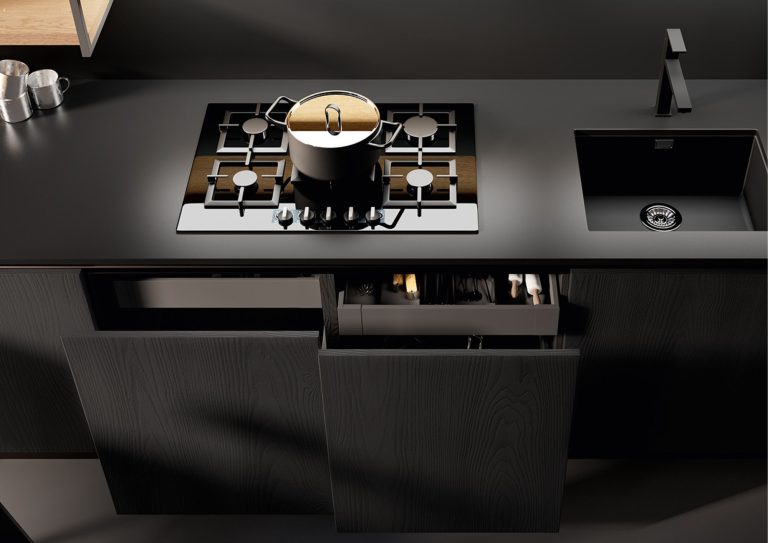
Since the wet kitchen handles the brunt of the cooking, you’ll need a countertop material that can stand up to the challenge. Here’s what to consider:
-
Durability: Opt for hard-wearing materials like quartz or Kompacplus. These resist scratches, stains, and heat, making them ideal for heavy-duty cooking.
-
Water Resistance: Frequent exposure to water is inevitable. Choose a non-porous material that won’t absorb liquids, preventing staining and promoting easy cleaning.
Dry Kitchen Countertop Contenders: A Balance of Beauty and Function
The dry kitchen offers more flexibility in material selection. Here’s why:
-
Reduced Wear and Tear: Lighter food prep means less wear on your countertops. You can explore a wider range of materials, including marble, engineered stone, or porcelain.
-
Aesthetics Take Center Stage: With less risk of damage, you can prioritize aesthetics. Consider the visual impact of the material and how it complements your overall kitchen design.
Get Cabinet Quote ( In 24 Hours )
Wet & Dry Kitchen Design Concepts #2 - Design Continuously
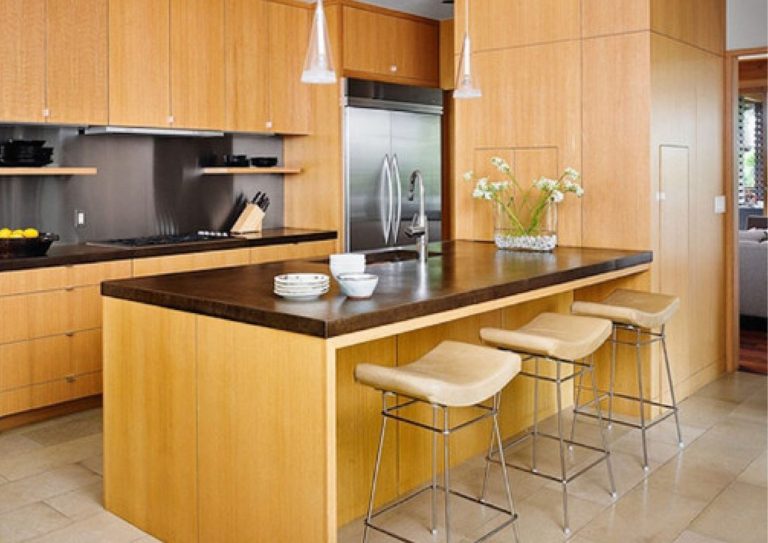
Having two distinct kitchen areas doesn’t mean sacrificing a unified look. Here’s how to achieve design harmony:
-
Color Palette Power: Maintain a consistent color scheme throughout both kitchens. This creates a sense of visual continuity and prevents the space from feeling disjointed. You can use the same paint color on the walls or incorporate pops of a common accent color in both zones.
-
Material Matchmaking: Choose materials that complement each other. For example, if you use stainless steel appliances in your wet kitchen, consider incorporating brushed nickel hardware or stainless steel accents in the dry kitchen. This creates a sense of connection without everything looking exactly the same.
-
Flooring Flow: Ideally, use the same flooring material throughout both kitchen areas, especially if they are open to each other. This creates a seamless visual transition and reinforces the idea of one cohesive space.
-
Don’t Forget the Details: Small details can make a big impact. Lighting that carries through both areas or similar cabinet hardware styles can subtly tie the spaces together.
Wet & Dry Kitchen Design Concepts #3 - Leave A Space
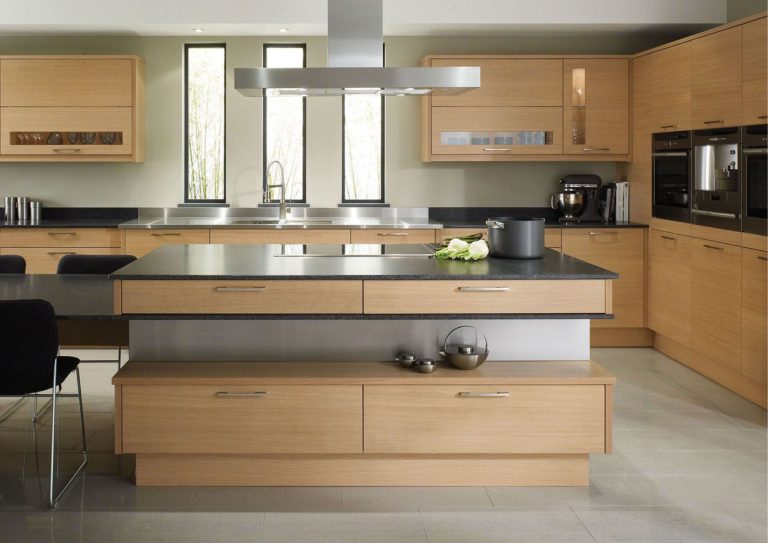
While a wet and dry kitchen offers efficiency, strategic separation can further enhance its benefits:
-
Reduced Heat Transfer: Keeping a slight distance between the two zones helps prevent heat generated in the wet kitchen from radiating into the dry area. This keeps your food prep zone cool and comfortable, especially during hot weather or heavy cooking sessions.
-
Enhanced Air Quality: Maintaining some separation helps contain cooking odors and fumes within the wet kitchen. This minimizes the spread of unwanted smells into your living space, ensuring a fresher overall environment.
-
Spacious Planning Opportunity: With extra space, you can create a more generous layout in your dry kitchen. This translates to a more comfortable prep area and additional storage solutions.
Finding the Perfect Balance:
The ideal separation distance depends on your specific layout. However, even a few meters can make a significant difference. Consult with a designer to determine the optimal spacing for your kitchen.
Wet & Dry Kitchen Design Concepts #4 - Kitchen Island
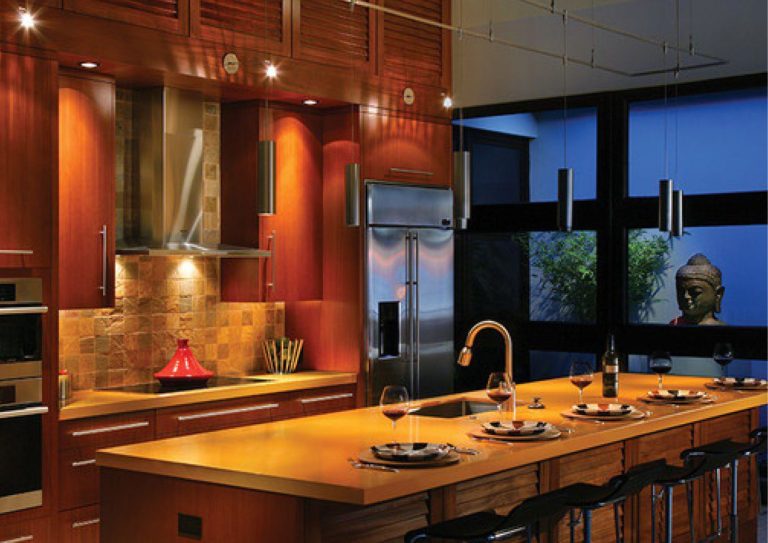
Here’s an improved version of the text about kitchen islands for separating wet and dry kitchens:
The Multifunctional Marvel: Kitchen Islands for Wet & Dry Kitchen Separation
Kitchen islands are a superstar solution for separating wet and dry kitchens. But their magic goes beyond just dividing space:
-
Space Definition with Style: A strategically placed island creates a clear separation between your cooking and prep zones, enhancing the functionality of both areas.
-
Beyond the Barrier: Kitchen islands offer valuable real estate! Incorporate a breakfast bar or extend the countertop to create a dining area, fostering a social and inviting atmosphere.
-
Design Powerhouse: Kitchen islands come in a variety of styles, materials, and sizes. Choose one that complements your overall kitchen design and reflects your personal taste. From sleek and modern to warm and traditional, the possibilities are endless.
Finding Your Perfect Island Match:
Consider these factors when selecting your island:
- Functionality: Think about how you’ll use the island. Do you need additional prep space, a breakfast bar, or hidden storage?
- Size and Scale: Ensure the island fits comfortably within your kitchen layout without creating a cramped feeling.
- Material Magic: Consider materials like granite, quartz, or wood that complement your existing countertops and cabinetry.
Kitchen islands are a versatile and stylish way to separate your wet and dry kitchen while maximizing functionality and aesthetics.
Wet & Dry Kitchen Design Concepts #5 - Partition
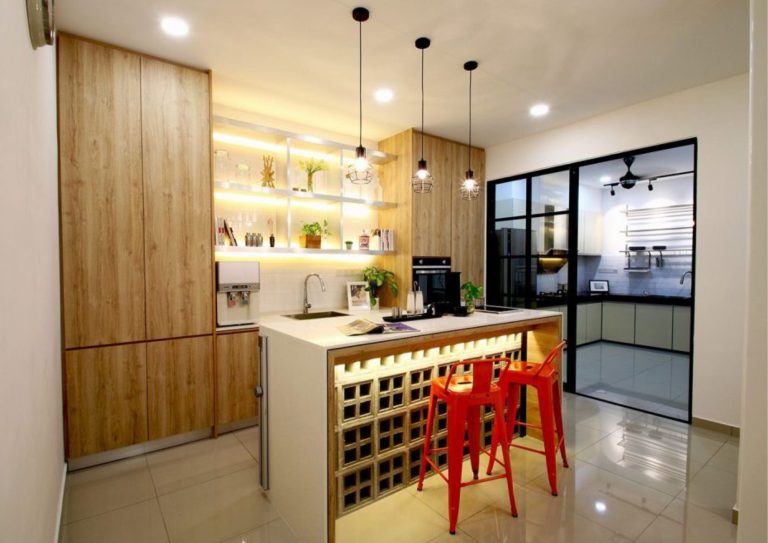
Light and Bright Separation: Glass Partitions for Wet & Dry Kitchens
Glass partitions offer a stylish and functional way to separate your wet and dry kitchen areas. Here’s why they shine:
-
Open and Airy: Unlike solid walls, glass partitions maintain a sense of openness and allow natural light to flow throughout the space. This keeps both areas feeling bright and airy.
-
Visual Connection: You can still maintain a visual connection between the two zones, fostering a sense of spaciousness and allowing for easy communication while cooking.
-
Odor Control on Demand: Sliding glass doors or panels offer the flexibility to close off the wet kitchen when needed. This helps contain cooking odors and fumes, keeping the rest of your house fresh.
Design Versatility:
Glass partitions are more than just functional – they can be a design element in your kitchen. Consider:
-
Frosted or Tinted Glass: For a touch of privacy or to obscure splatters, explore frosted or tinted glass options.
-
Metal Accents: Choose a partition with a metal frame that complements your kitchen’s hardware or appliances for a cohesive look.
Finding the Perfect Fit:
Consult with a professional to determine the ideal size, style, and functionality of your glass partition. They can ensure it integrates seamlessly with your existing layout.
Get Cabinet Quote ( In 24 Hours )
Purpose Of Incorporating Wet And Dry Kitchen Design

The Rise of Kitchen Efficiency: Why Wet & Dry Designs are Booming
Gone are the days of a single kitchen handling all the culinary chaos. The wet and dry kitchen design is taking center stage, capturing the hearts (and appetites) of homeowners worldwide. But what exactly is it, and why is it gaining such popularity? Let’s delve into the world of wet and dry kitchens and explore the benefits they offer:
-
Double the Space, Double the Efficiency: Separating your kitchen into dedicated wet and dry areas creates a more spacious and organized environment. The wet kitchen handles heavy-duty cooking, while the dry kitchen becomes a haven for food prep and lighter meals. This separation allows for improved workflow and eliminates clutter in each zone.
-
A Breath of Fresh Air (Literally!): No more lingering food smells throughout your house! The wet kitchen, equipped with proper ventilation, keeps cooking odors contained. This ensures a fresh and inviting atmosphere in the rest of your living space.
-
Aesthetics Take Center Stage: Imagine a dry kitchen that seamlessly integrates with your dining or living room. Since heavy cooking happens elsewhere, you have the freedom to use high-quality materials and create a beautiful, functional extension of your living area.
-
A Kitchen for Every Lifestyle: Whether you’re a passionate home cook or a quick-meal prep master, a wet and dry kitchen can be customized to your needs. The dedicated zones cater to different cooking styles, keeping your kitchen organized and efficient.
Intrigued by the possibilities? This guide will explore the various design considerations, layout options, and benefits of incorporating a wet and dry kitchen into your home. Get ready to unlock a world of culinary efficiency and stylish design!
Key Considerations To Crafting Your Dream Wet and Dry Kitchen:
Why AmpQuartz is Johor’s #1 Choice for Kitchen Cabinets
AmpQuartz has established itself as the preferred choice among discerning homeowners. Their aluminium cabinet systems offer exceptional benefits particularly suited to our local climate and cooking habits.
What Sets AmpQuartz Apart:
-
Climate-Optimized Materials: Specially designed for Malaysia’s high humidity
-
Pest-Free Guarantee: Complete resistance to termites and other pests
-
Lifetime Durability: Cabinets that maintain structural integrity for decades
-
Low Maintenance: Simple cleaning requirements with no special treatments
-
Customization Options: Tailored solutions for any kitchen configuration
AmpQuartz’s consultants bring extensive expertise to every project, offering complimentary 3D design services that help visualize your kitchen before installation begins. This collaborative approach ensures your kitchen perfectly matches your needs and preferences.
As one satisfied Johor homeowner shared: “After my previous wood cabinets warped from the humidity, I switched to AmpQuartz aluminium cabinets. Five years later, they still look and function like new, even in my busy wet kitchen.”
Planning Your Wet and Dry Kitchen Project
Ready to transform your kitchen? Consider these essential steps:
-
Assess Your Needs: Evaluate your cooking habits, entertainment style, and family size
-
Set a Realistic Budget: Allocate funds based on long-term value, not just initial cost
-
Consult Professionals: Work with experienced designers who understand local conditions
-
Prioritize Materials: Invest in quality where it matters most (cabinets, countertops)
-
Plan for the Future: Consider how your needs might change over time
Remember that proper planning can prevent costly mistakes. A survey of Johor renovation projects found that homeowners who invested in professional design services reported 70% fewer regrets about their kitchen renovations compared to those who attempted to design without expert guidance.
Making the Right Choice for Your Home
The wet and dry kitchen cabinet configuration represents more than just a trend—it’s a practical solution perfectly suited to Malaysian cooking habits and lifestyle needs. By investing in quality materials and thoughtful design, you create a kitchen that enhances daily life while adding significant value to your property.
Whether you’re building a new home or renovating an existing kitchen, the dual-kitchen approach offers tangible benefits that justify the investment. With proper planning and quality materials, your wet and dry kitchen can provide decades of functionality and enjoyment.
For personalized advice on creating your ideal wet and dry kitchen, consider consulting with AmpQuartz’s design experts. Their free 3D design service can help you visualize the possibilities for your space, ensuring your kitchen perfectly balances form and function for your Johor home.
This guide was created to help Johor homeowners make informed decisions about wet and dry kitchen cabinet solutions. For more information or to schedule a consultation, contact AmpQuartz today.
FAQ
The wet kitchen requires regular deep cleaning to manage grease and moisture, with weekly attention to hood filters and backsplashes. The dry kitchen needs less intensive cleaning but should be wiped down daily to maintain its appearance. Using appropriate cleaners for different surfaces is essential—consult the Malaysian Consumer Association guidelines for recommended products
While the initial investment is 15-25% higher than a traditional kitchen, Johor homeowners typically see returns through increased property values (12-15% higher according to local real estate data) and improved lifestyle benefits. For terrace houses, semi-open concepts offer the best value.
Effective odor control requires proper ventilation with a powerful hood (minimum 1,200 m³/h extraction rate) in the wet kitchen, plus a physical barrier like a glass door or partition. For Johor homes, direct outdoor venting is strongly recommended over recirculation systems due to the intensity of local cooking.
For Johor’s humid climate, solid surface materials like quartz and granite offer excellent durability against moisture and heat. Engineered quartz provides the best balance of durability, low maintenance, and resistance to staining from common Malaysian spices and ingredients. Stainless steel is also an excellent option for areas near the stove.
In Johor homes, a typical wet kitchen requires 8-10 square meters, while a dry kitchen needs about 6-8 square meters. However, the layout can be adapted for smaller spaces through efficient design solutions like sliding partitions or compact appliances. Even in apartments, a wet and dry kitchen for small spaces can be achieved with careful planning.
A wet kitchen is designed for heavy-duty cooking that involves oil, steam, and strong odors. It typically includes the main stove, range hood, and utility sink. A dry kitchen is used for light food preparation, serving, and social interaction, often featuring a coffee machine, toaster, and casual dining area.