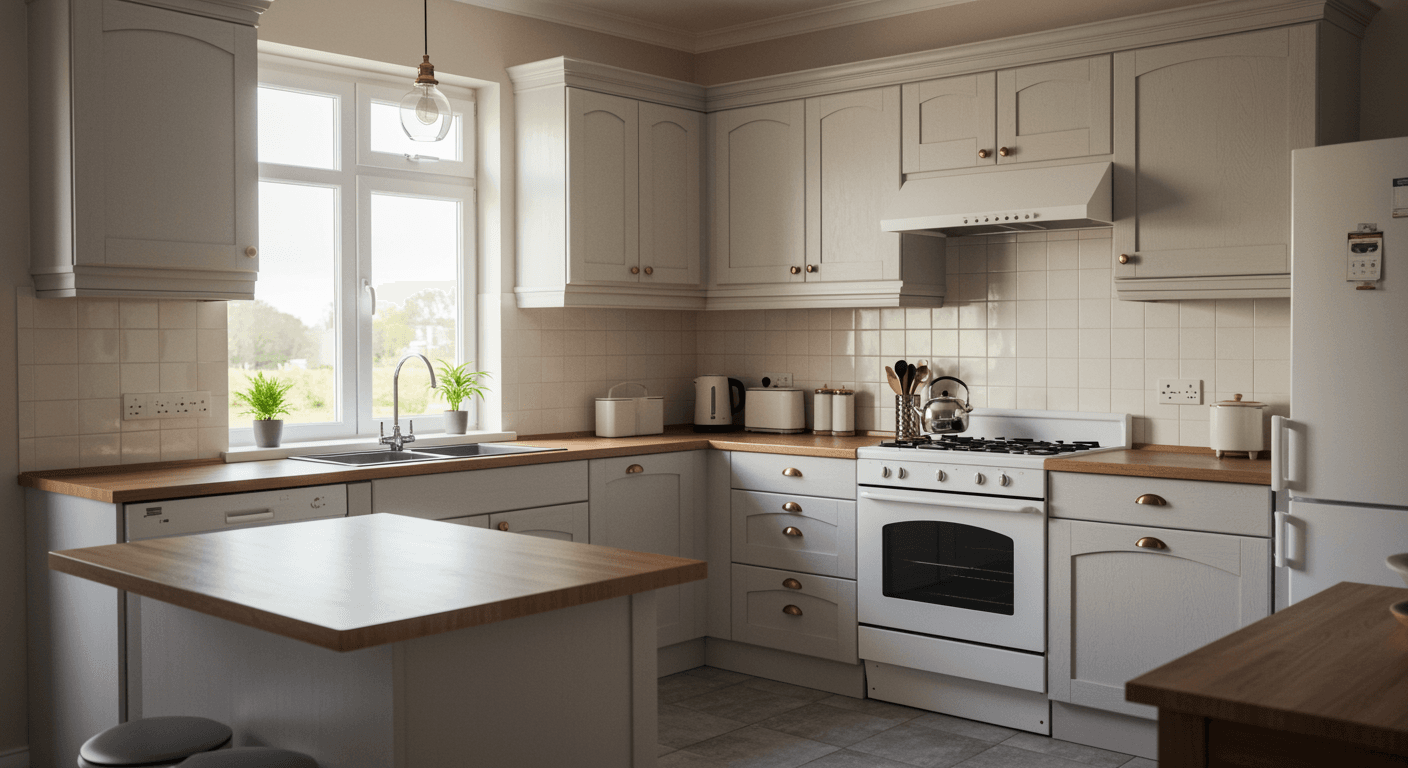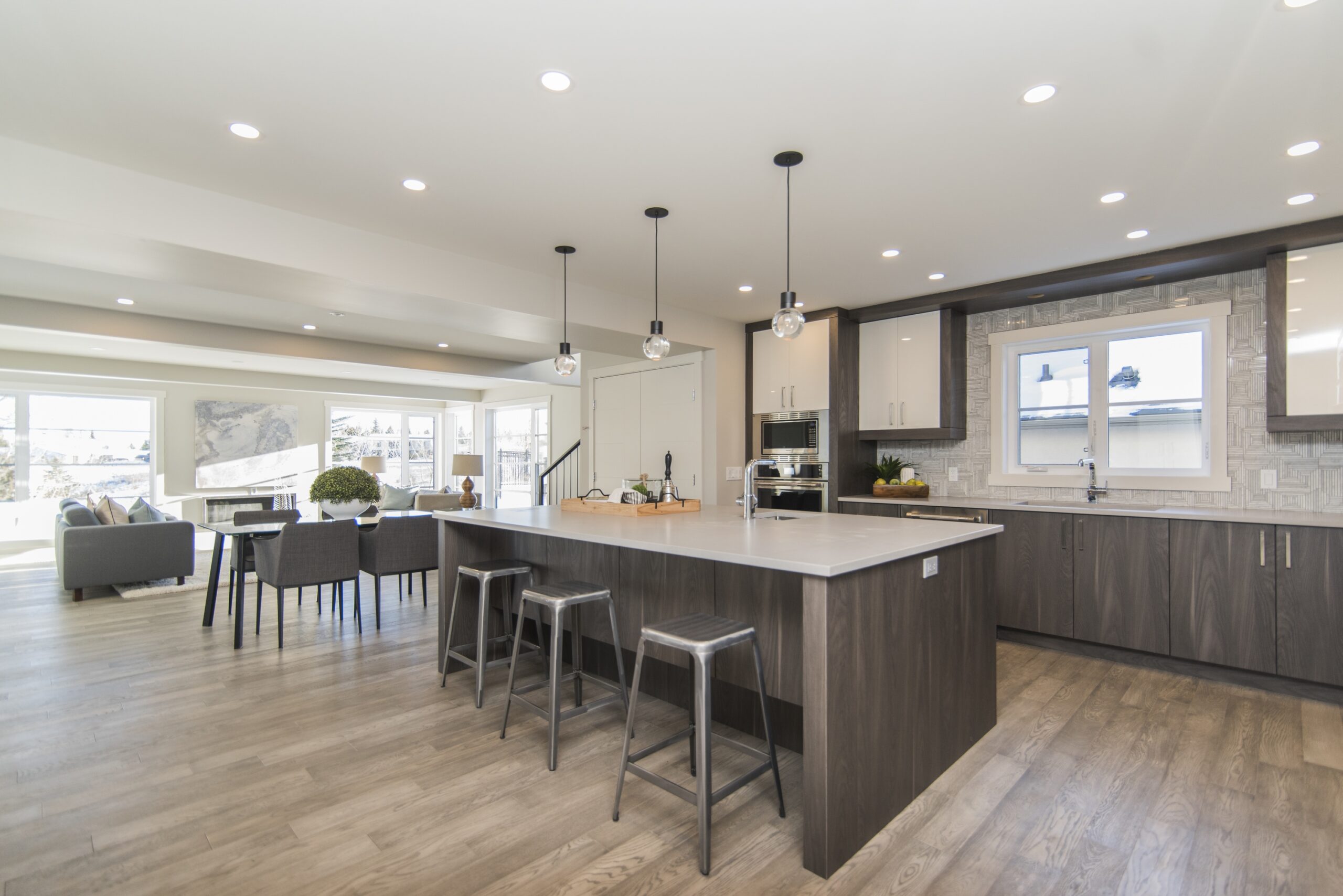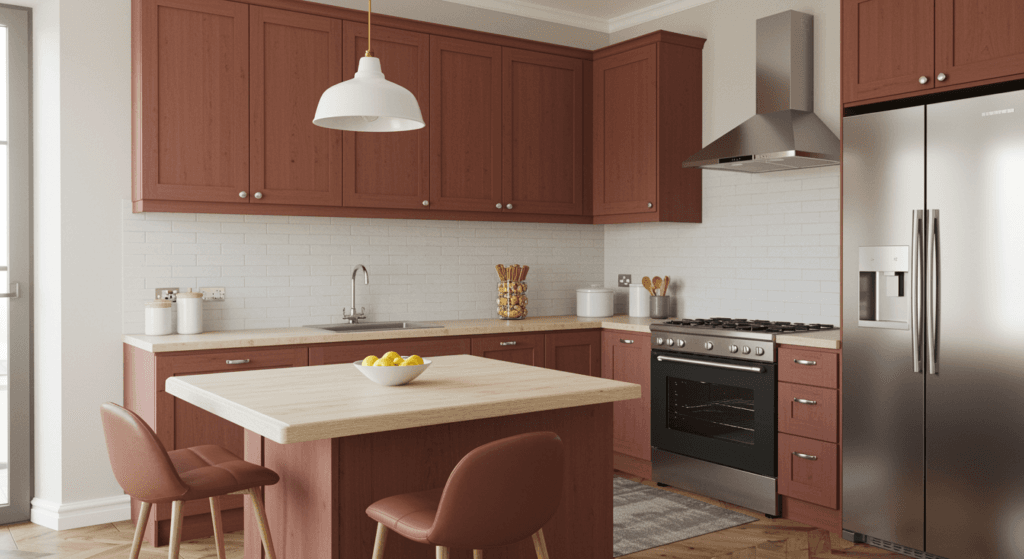

Kitchens for living have become central centres connecting cooking, dining, and relaxation instead of merely useful areas. Thoughtful designs, consistent materials and flawless transitions enable the kitchen to meld naturally with other living spaces. Open-concept kitchens improve social interaction as well as daily living by giving openness, flow, and comfort top priority.
Kitchens For Living 1: Seamless Integration with Living Spaces
Designed for contemporary open-concept life, where the kitchen is more a continuation of the social sphere of the house rather than a distinct utilitarian area, kitchens feature faultless integration with living spaces. Visual harmony is especially important in a “kitchen for living” idea.
This starts with a consistent material and colour scheme that moves easily between the kitchen, dining room, and living room. Consistent flooring, complementary cabinet colours, and matching finishes let to blur lines and produce a combined spatial experience. With handle-less designs, flush panels, and built-in appliances enabling the kitchen to assume more of a furniture-like presence, cabinetry is absolutely essential for realising this integration.
Rather than drawing attention as a completely utilitarian area, the kitchen blends into the surroundings and elevates the house's general appeal. Careful design, such as hidden storage and simple shapes, helps to further minimise visual clutter — an important issue in open layouts where the kitchen is constantly visible.With warm, ambient lighting assisting the kitchen to easily fit into living spaces particularly in the evenings and get-togethers.
Open-concept kitchens also gain from understated design cues such matching textures, delicate wood highlights, or exquisite stone surfaces that reflect features seen in neighbouring living areas. The kitchen becomes a natural extension of everyday life — supporting cooking, entertainment, and relaxation without disturbing the comfort or visual tranquility of the house when these elements are thoughtfully examined.
Kitchens For Living 2: Zoning Without Walls
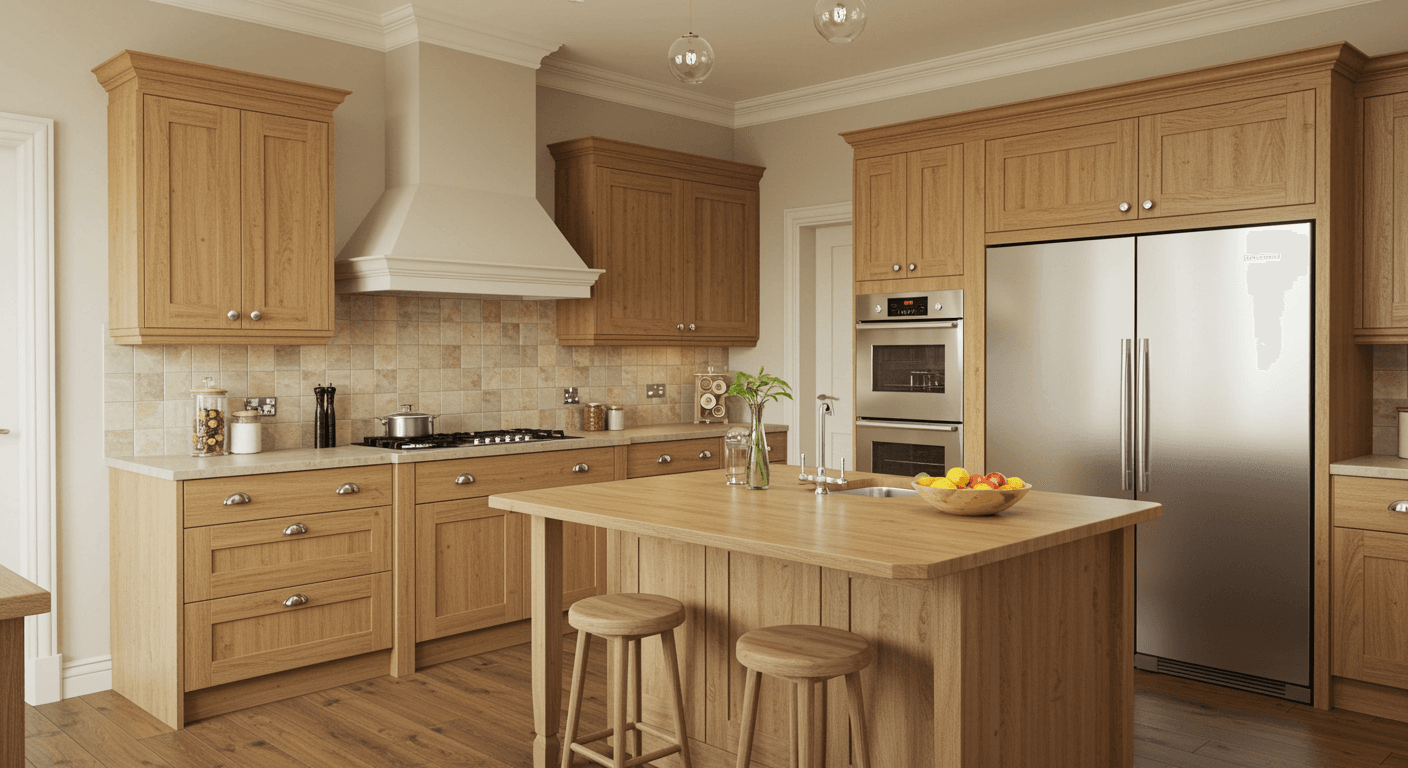
Especially in open-concept homes where the kitchen, dining, and living rooms mix into one coherent hub, zoning without walls is a distinguishing feature of designing a kitchen for living. Smart zoning subtly distinguishes each region using visual and functional markers rather than relying on physical partitions, hence maintaining connection and openness.
This method emphasises the kitchen island, which serves as a natural anchor dividing cooking areas from dining or lounging areas without obstructing sight-lines. Changes in ceiling design such as a dropped ceiling, timber slats, or a different lighting arrangement can further distinguish the kitchen area while keeping the space airy and unified. With pendant lights above the island and softer ambient illumination in the living area, lighting is especially effective as it gives each area a meaning.
Although zoning can be accomplished via design direction, furniture arrangement, or small material changes, flooring continuity is usually kept to prevent visual breaks. Placing a couch with its back to the kitchen, for instance, distinctively demarcates the living area while yet allowing for contact between them. Cabinet textures and finishes can also help the kitchen to feel more elegant and furniture-like instead of just utilitarian.
Zoning in kitchens meant for living fosters movement, communication, and flexibility, hence enlarging the area and inviting it. This strategy helps contemporary lifestyles where cooking, entertaining, working, and relaxing coexist, therefore guaranteeing the kitchen remains a welcoming, integrated hub rather than a graphically dominant workplace.
Kitchens For Living 3: Social-First Layout
Particularly in an open-concept home where cooking, dining, and social interaction would naturally coincide, a social-first layout is one of the most distinguishing features of a “Kitchen for Living.” Rather than setting the kitchen as an isolated workspace, this arrangement prioritises human interaction in the centre of the design.
Important components include face-out cooking arrangements like setting the stove or sink on a kitchen island so the person preparing meals may stay connected with family members or visitors rather than turning their back to the living area. Encouragement of people to come together without disrupting the cooking flow turns the island itself into a multipurpose hub — serving as a casual eating area, discussion place, homework station, or even a temporary workplace.
Ensuring visitors can spend at ease while avoiding high-traffic cooking areas depends much on seating height, spacing, and comfort. With broad pathways and natural routes of movement to avoid crowding even when several persons are present, a well-planned social-first kitchen also values easy flow. From fast morning conversations to energetic supper gatherings, this openness promotes spontaneous interaction.
Furthermore, careful appliance and prep zone arrangement guarantees efficiency without separating the cook, therefore underlining the notion that the kitchen is more than just a working area but rather a shared living environment. In essence, a social-first kitchen becomes a welcoming, inclusive centre that mirrors contemporary living where connection, flexibility, and daily life takes precedence over strict, task-centred design.
Kitchens For Living 4: Storage That Reduces Visual Clutter
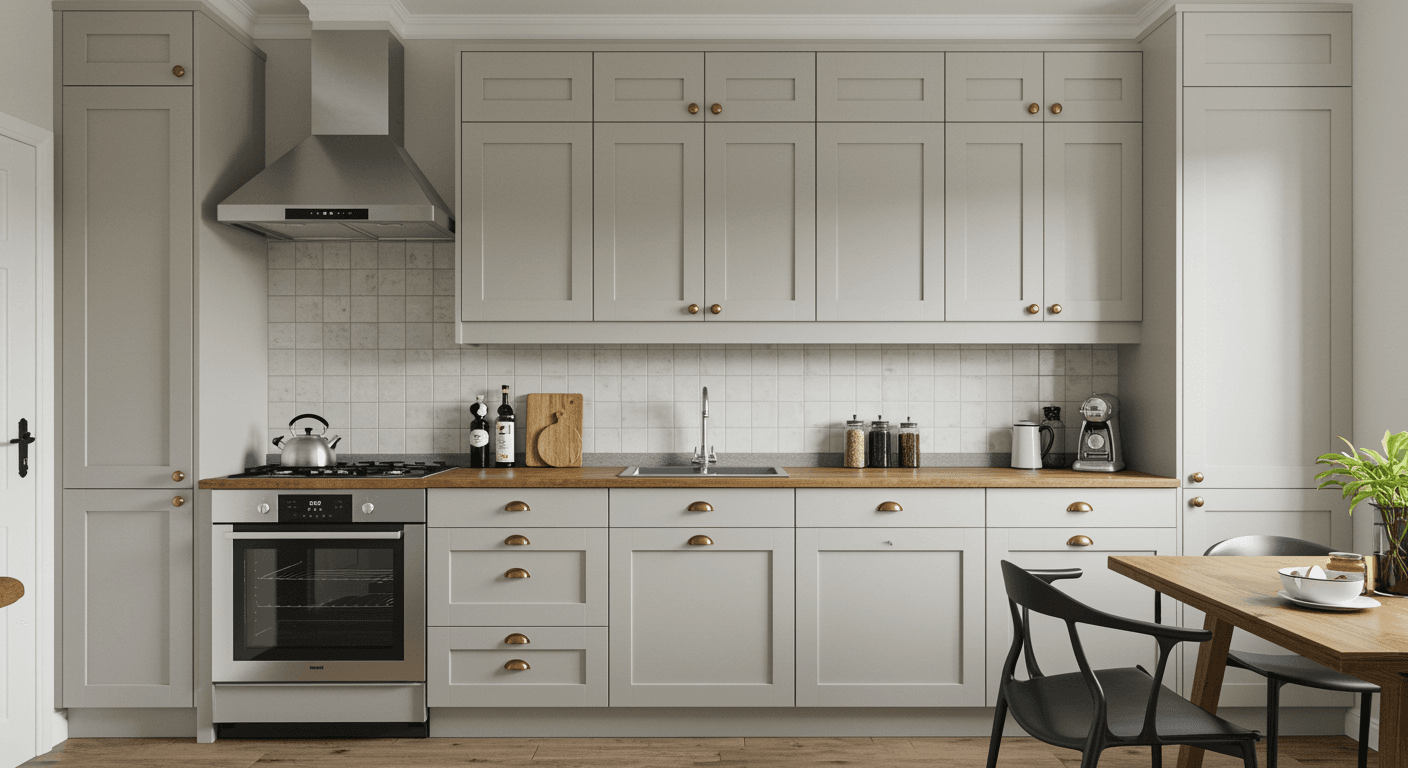
Storage is absolutely necessary in a kitchen intended for living to help to cut down on visual chaos and keep the tranquil, unified ambiance so vital to an open-concept hub. Unlike conventional kitchens that can tolerate a degree of mess, open-plan arrangements show every surface to visibility, therefore clever storage solutions becomes a design need instead than an after-thought.
One of the most efficient strategies is full-height cabinetry, which maximises vertical space and provides a clean architectural appearance that merges flawlessly with surrounding living spaces. Handle-less doors, push-to-open mechanisms, and integrated appliances help to create this streamlined impression even more by letting the kitchen read as a part of the whole rather than as an independent utility space.
Well-organised interior storage solutions like pull-out pantries, deep drawers with dividers, and corner options guarantee dedicated places for daily necessities, hence lowering the urge to cram counters. Open-concept kitchens especially benefit from pocket doors and appliance garages since they hide commonly used small appliances while yet providing easy access.
Prioritising closed storage above open shelving also helps maintain a sense of order, particularly in households where the kitchen is in constant use. Thoughtful storage design advances the notion of the kitchen as a living area — one that feels tidy, inviting, and aesthetically coherent all day by reducing visual noise and concealing practical components.
Kitchens For Living 5: Long-Term Value & Adaptability
Designing an open-concept kitchen as a true “kitchen for living” calls from the beginning for a fundamental attention on long-term value and adaptability. Unlike classic kitchens that are physically separated, open-concept kitchens remain always on display; thus, permanent appeal depends on timeless design decisions.
Choosing for neutral colour schemes, traditional finishes, and sleek cabinetry guarantees the kitchen stays current as fashions change. Without needing a full makeover, these basic components provide a versatile backdrop that lets homeowners refresh the area over time with little changes such lighting, bar stools, or ornamental accents.Adaptation also comes from careful layout preparation.
Whether it is to house a growing family, more entertaining, or work-from-home schedules, modular cabinetry systems, adjustable shelving, and multi-functional islands let the kitchen grow with changing lifestyle demands. Long-term value is preserved by robust materials since open-concept kitchens are always used and seen. High-quality countertops, strong cabinet finishes, and simple-to-maintain surfaces keep the kitchen looking great while lowering long-run upkeep costs.
Planning for emerging technologies like integrated smart appliances, hidden power outlets, and adjustable lighting systems also helps to guarantee the area stays habitable and practical in the years ahead. Besides improving everyday life, a well-designed open-concept kitchen valuing durability and flexibility adds significant resale value, hence making it a sensible investment for those who see the kitchen as the centre of contemporary living.