Three weeks ago, a mother of two stood in her new Selangor terrace house, staring at an empty kitchen space. “The kids need breakfast, I need coffee, and somehow everything feels like it’s in the wrong place,” she told our designer. She’d moved from a compact apartment where everything was within arm’s reach to this larger space that somehow felt less functional.
That’s the thing about kitchen layout design — size doesn’t equal satisfaction. We’ve worked with families who love their tiny galley kitchens and others who feel lost in their spacious open-plan spaces. What makes the difference isn’t square footage or expensive fittings. It’s whether the space actually works with how you live.
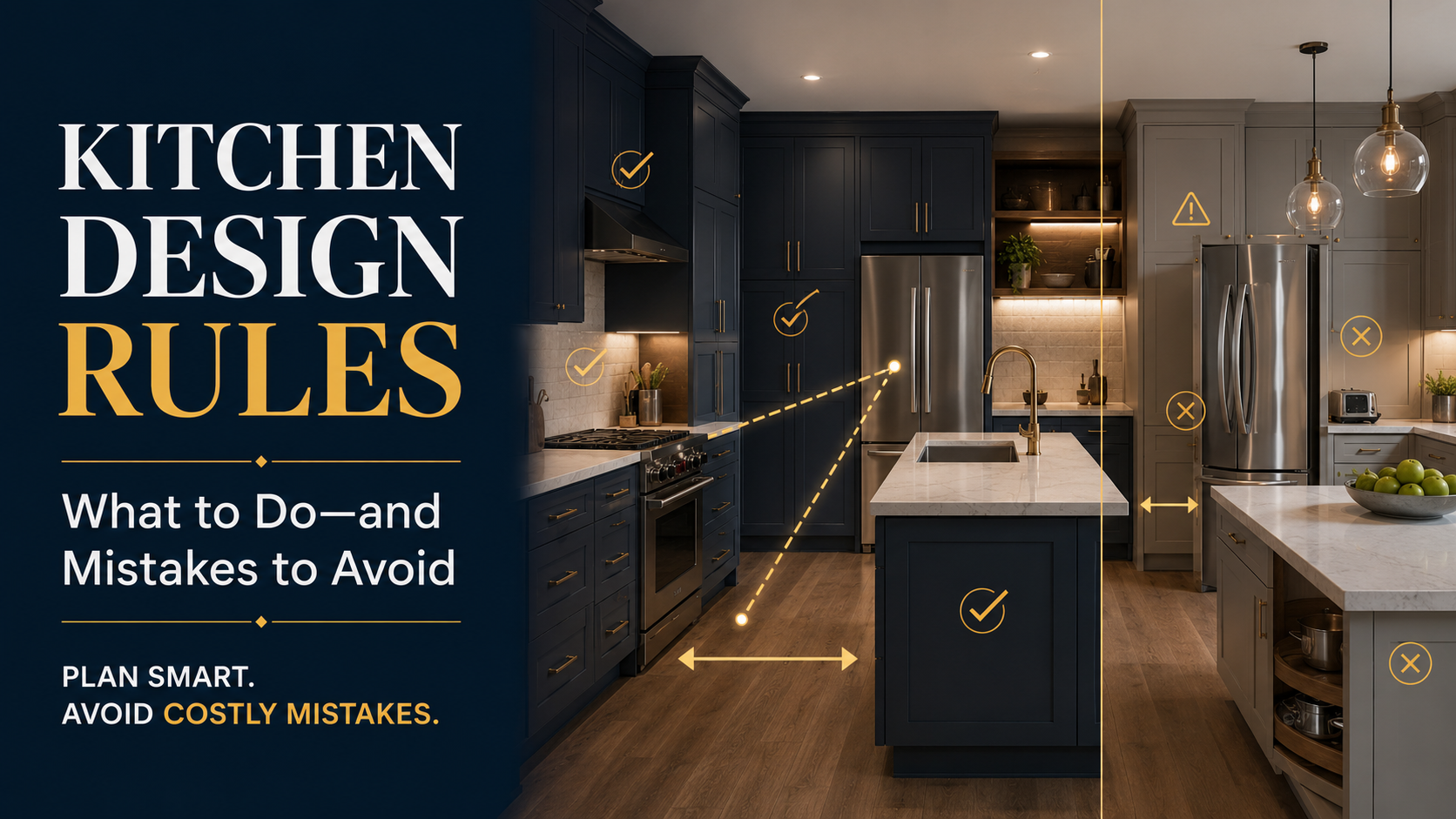
The professionals call it the work triangle — sink, stove, and fridge arranged so you’re not doing laps around your kitchen just to make roti canai for breakfast. The magic happens when each point sits between 4 to 9 feet apart, close enough that you’re not walking marathons, but far enough that you’re not bumping into the refrigerator door every time you turn around. Most built-in appliances follow 60cm width standards, which means planning in these increments actually makes everything fit together like puzzle pieces.
Here’s what catches people off guard: if you’re planning an island, you need roughly 100cm of walking space around it. That’s not just for show — it’s so two people can cook together without playing kitchen bumper cars.
That Selangor mother? Once we mapped out her actual morning routine — where she makes school lunches, where the rice cooker lives, where the kids grab their water bottles — the layout became obvious. The space started working for her family instead of against them.
If you’re standing in your own empty kitchen wondering how to make sense of the space, send us your floor plan on WhatsApp. We’ll show you exactly how these layout principles translate into a kitchen that actually fits your life.
Why Your Kitchen Layout Fails (And How to Fix It)

Image Source: RoomSketcher
Here’s what most people get wrong about kitchen layout design: they think it’s about fitting everything in. But the real question isn’t “Where can I put this?” It’s “How do I actually move through this space when I’m juggling a pot of bubbling curry, wet hands, and a toddler asking for a snack?”
The difference between a kitchen that works and one that drives you crazy every day comes down to functional relationships between different work zones. Not Pinterest-worthy arrangements. Not what looks good in photos. What actually makes sense when you’re living your life.
The 80-year-old rule that still saves marriages
That kitchen triangle we mentioned? It’s been preventing kitchen arguments since the 1940s. The Illinois School of Architecture figured this out as a way to save money on construction, but what they really discovered was how to save your sanity during morning rush.
The math matters here: total perimeter between 13 and 26 feet, with each leg measuring 4 to 9 feet between sink, fridge, and stove. Why these specific numbers? Because anything shorter and you’re constantly bumping into things. Anything longer and you’re doing cardio just to make breakfast.
The triangle breaks down the moment you put a dining table or tall cabinet in the middle of the path. Suddenly, getting from stove to sink requires navigating an obstacle course. Smart planning keeps those pathways clear and creates natural zones where multiple people can cook without collisions.
Islands: the good, the bad, and the “why did we do this?”
An island only works when it actually improves your kitchen’s flow. Before you fall in love with the idea, measure twice: you need at least 42 inches of clearance around all sides. Less than that, and you’ve created a beautiful bottleneck.
Islands shine in L-shaped or one-wall kitchens where they can complete that triangle we talked about. The best ones multitask:
Extra prep space that doesn’t compete with your main cooking area
Smart appliance placement (second sink, cooktop)
Storage that actually makes sense for your daily routine
Seating that encourages conversation without blocking workflow
For compact kitchens, a narrow or mobile island gives you flexibility without the commitment. Sometimes a peninsula delivers the same benefits while taking up less precious floor space.
Small kitchens that work harder than big ones
L-shaped and galley layouts often outperform sprawling kitchens because every inch has a purpose. L-shapes naturally separate your cooking and cleaning zones while making the most of corner spaces. Galley kitchens create that perfect corridor workflow with parallel counters that keep everything within reach.
When space is tight, think vertical and flexible. Wall-mounted elements free up counters. Folding surfaces appear when you need them and disappear when you don’t. The goal isn’t cramming more stuff in — it’s making sure everything you need fits how you actually cook.
Stuck with a tricky layout that doesn’t seem to have a solution? Message our team on Instagram, TikTok, or through our website — we’ve solved stranger layout puzzles than yours.
The Storage Mistakes That Haunt You Every Day
Storage optimization changes everything about how your kitchen feels. Not just looks — feels. You know that moment when you’re hunting for the good knife while dinner’s burning, or when every pot falls out because you opened the wrong cabinet? That’s not clumsiness. That’s storage planning that never considered how people actually cook.
Where things should actually live
The couples who end up loving their kitchens think backwards from their routines. Silverware lives near the sink because that’s where plates get loaded into the dishwasher. Heavy pots sit in base cabinets because nobody wants to lift a dutch oven over their head. Everyday plates go in the wall cabinet closest to where you actually eat, not where they look prettiest.
Here’s what professionals learned from watching real families: deep drawers with adjustable dividers beat traditional shelves for almost everything bulky. Tupperware, mixing bowls, the rice cooker you use twice a week — they all disappear into organized drawers instead of creating cabinet avalanches. Under-sink storage gets tricky with plumbing, but that’s exactly where cleaning supplies belong.
The cabinet space you’re wasting
Floor-to-ceiling cabinets double your storage, sometimes triple it. That gap above your current cabinets? It’s collecting dust and costing you storage space every single day. Most families store holiday dishes, serving platters, and small appliances they use occasionally in that upper zone — things that don’t need daily access but deserve proper homes.
Even that skinny space between your fridge and the wall can become spice storage or a wine rack. Ceiling-mounted pot racks work brilliantly if you actually use your cookware regularly. If your expensive pots collect dust, maybe stick with cabinet storage.
The hidden storage that actually works
Hidden pantries behind cabinet-matched doors give you restaurant-level storage without the visual chaos. But here’s what matters more: pull-out shelves that bring everything to you. No more digging behind old bottles of soy sauce to find what you need.
Corner cabinets used to be dead space. Now they can house lazy Susans for condiments or vertical pull-outs for brooms and the vacuum cleaner. Those pull-down racks for upper cabinets? Game-changers if you’re not tall enough to reach comfortably.
Come see these storage solutions in person — our Ampang showroom has working examples of every system we install. Message us on Instagram (@ampquartz) or WhatsApp to book a time that works for your family’s schedule.
When Materials and Lighting Actually Matter
Walk into any showroom and you’ll hear about “premium surfaces” and “architectural lighting design.” But here’s what homeowners actually tell us after living with their kitchens for two years: the countertop that looked stunning in the catalog photo matters less than whether you can put a hot pot on it without panicking.
Countertops that survive real life
Your countertop choice isn’t really about style — it’s about whether you’ll spend the next decade tiptoeing around your own kitchen. Quartzite handles the heat from that directly-from-the-stove wok without leaving permanent marks. Dekton gives you that natural stone look while shrugging off everything from turmeric stains to accidental knife drops.
Marble photographs beautifully, but ask anyone who’s owned it: those Instagram-worthy veins come with a side of constant worry about etching and stains. Sometimes the practical choice is butcher block that warms up a space, or even quality laminate that lets you spend your budget elsewhere.
The question isn’t “What’s most beautiful?” It’s “What can handle our Saturday morning pancake routine and weeknight stir-fry without making us nervous?”
Lighting that works at 6am and 10pm
Good kitchen lighting isn’t about creating drama — it’s about seeing what you’re doing without squinting or casting shadows on your chopping board. The three-layer approach sounds technical, but it’s simple:
General lighting so the whole space feels bright and welcoming
Task lighting so you can actually see if those onions are diced evenly
Mood lighting for when you want the space to feel cozy rather than clinical
Integrated LED strips tucked under cabinets eliminate those frustrating shadows that fall right where you’re working. Inside glass cabinets, they turn everyday dishes into displays. Even toe-kick lighting serves a purpose: no more stubbing toes during midnight snack raids.
The best lighting plan is the one you don’t notice — it just makes everything easier, morning to night.
Connect with us on Instagram (@ampquartz) or TikTok (@ampquartzcabinets) to see how different materials and lighting combinations look in actual kitchens, not just showroom displays.
Kitchens That Grow With Your Life
Real families don’t live in magazine photos. A retired couple in Petaling Jaya learned this when they realized their dream kitchen island had become a barrier between them and their weekend cooking rituals. “We used to cook together every Saturday morning,” the husband told us, “but now one of us is trapped on each side.”
That’s when we started asking different questions.
Making kitchen islands work for actual people
Islands should bring families together, not split them apart. The sweet spot sits at 42-48 inches of clearance around all sides — enough room for two people to pass without the awkward kitchen dance. But here’s what the design magazines won’t tell you: the shape matters more than the size.
L-shaped and T-shaped islands create natural gathering spots where conversations happen face-to-face instead of side-by-side. Think about it — when your teenager raids the fridge after school, do you want them perched next to you like you’re sharing airplane seats, or across from you where you can actually see their face?
The smartest islands include charging stations that disappear when not needed. Nobody wants to see phone cables draped across their beautiful stone countertop during dinner parties.
When the grandkids come to stay
Kid-friendly kitchens aren’t about plastic everything. They’re about placing the kids’ cups and snacks in lower drawers where small hands can reach them. One grandmother in Subang Jaya had us install a pull-out step in her kitchen island — her four-year-old grandson can help with weekend baking, and it slides away invisibly when the grown-ups need the space.
Open-plan designs let you watch the kids while you cook, but islands help define where the homework zone ends and the cooking zone begins. Smart parents create flexible seating that works for a five-year-old’s art project and a fifteen-year-old’s midnight snack.
Smart appliances that actually make sense
Touch-free faucets make sense when your hands are covered in flour. Motion-sensor lights help when you’re getting water at 3am. But that smart refrigerator that orders groceries? Most families we work with end up turning off those features within six months.
The key question: does this technology solve a problem you actually have, or just create new ones?
Planning a kitchen that will work for your family five years from now? Message us on WhatsApp with your floor plan — we’ll show you how to build in the flexibility that makes a house feel like home.
Your Kitchen Should Work With You, Not Against You
That mother in Selangor we mentioned? Six months later, she sent us a photo of her kids doing homework at the kitchen island while she prepped dinner. “I finally have a kitchen that gets it,” she wrote. “Everything just makes sense now.”
Kitchen design isn’t rocket science, but it’s not guesswork either. The work triangle principle works because it mirrors how real people actually move through their space. Smart storage works because it puts things where you naturally reach for them. Good lighting works because you can actually see what you’re doing at 6am when you’re half-asleep making coffee.
The families who love their kitchens ten years later aren’t the ones who picked the trendiest finishes or spent the most money. They’re the ones who asked the right questions: “Where will the lunch boxes live?” “Can two people cook here without bumping into each other?” “Will this still make sense when we’re older?”
Look, kitchen renovation feels overwhelming because it is overwhelming. You’re making dozens of decisions that you’ll live with every single day. That’s not something you should figure out alone.
Send us photos of your space on WhatsApp, and we’ll walk you through exactly how these layout principles apply to your specific situation. Because your kitchen isn’t just another room — it’s where your family’s daily life happens, and it deserves to work as hard as you do.