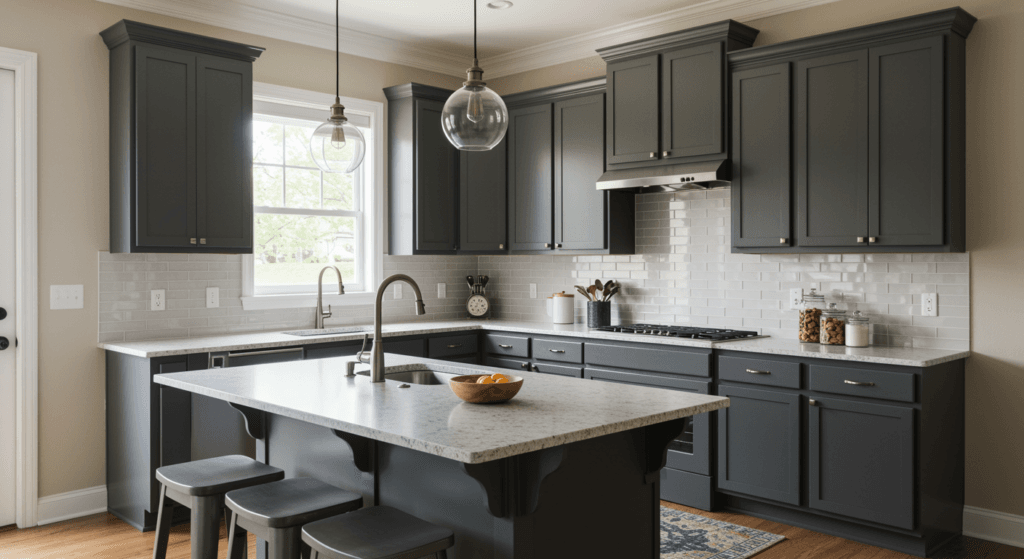

For Malaysian cooking, which often involves high-heat stir-frying, heavy use of oils, and colorful spices that can cause staining, both Quartz and Granite offer significant advantages. The “better” choice depends on whether you prioritize heat resistance or ease of maintenance.

Quartz is the premier engineered surface in the modern kitchen, specifically designed to eliminate the inherent vulnerabilities of natural stone. From a material science standpoint, Quartz countertops are a composite material typically consisting of 90-93% crushed natural mineral quartz bonded together with a high-performance polymer resin-binder.
Why Choose Quartz?
- Engineered Durability: The resin-binder creates a non-porous surface that is exceptionally resistant to staining and bacterial growth.
- Aesthetic Consistency: Unlike natural slabs, Quartz offers a predictable pattern, making it ideal for large L-shaped kitchens where seamless joints are required.
- Brand Reliability: Because these are manufactured products, leading brands provide rigorous quality control and specific technical warranties that natural stone cannot match.
Brand Spotlight
- Silestone by Cosentino: Highly regarded for its proprietary HybriQ technology and N-Boost surface modification, which enhances color vibrancy and liquid repellency.
- Caesarstone: A global pioneer in the quartz industry, recognized for setting the standard in premium aesthetics and material innovation.
- OTTO Marbleline: Offers a sophisticated balance of structural durability and elegant design, mimicking high-end marble with engineered strength.
- Classicut (Polarstone): Distinguished as a high-performance alternative that utilizes advanced manufacturing to provide reliable, high-density stone surfaces.
Granite: Natural Stone, Tough and Long Lasting
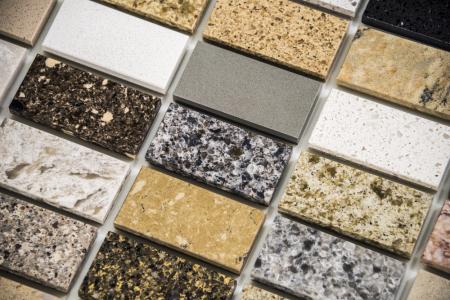
Granite is one of the most trusted natural stones used in kitchens, valued for its raw strength and timeless, earthy beauty. Unlike engineered surfaces, granite is formed naturally from cooled magma deep within the earth, making every slab completely unique in pattern and mineral composition.
From a material standpoint, granite is an igneous rock composed mainly of quartz, feldspar, and mica. It is cut, polished, and sealed before being used as a countertop surface, but its core structure remains naturally dense and highly durable.
Why Choose Granite?
- Natural Durability
Granite is extremely hard and heat-resistant. It can handle hot pots and pans better than many engineered surfaces, making it a strong choice for heavy cooking kitchens. However, because it is naturally porous, proper sealing is important to prevent long-term staining. - Unique Aesthetic Character
No two granite slabs are the same. Each piece carries natural veining, speckling, and mineral movement, giving kitchens a more organic and luxurious feel. This makes granite especially popular for homeowners who want a one-of-a-kind surface. - Long-Term Value
When properly maintained, granite can last for decades without losing its structural integrity. It is widely used in both residential and commercial kitchens due to its proven longevity.
While Granite is known for its natural strength, homeowners who prefer a more uniform look and lower maintenance often compare it with engineered quartz or newer sintered stone surfaces for modern kitchen designs.
Quartz vs Granite: Simple Guide for Heat, Stains and Daily Kitchen Use in Malaysia
A simple guide comparing quartz and granite for Malaysian kitchens, focusing on heat resistance, stain control, and everyday durability for busy family cooking.
1. Heat Resistance
Malaysian cooking often involves moving heavy, hot pots and woks directly from the stove.
- Granite: It is naturally heat-resistant and can withstand the heat from burning liquids or hot pans taken directly from the stove or oven without damaging the surface.
- Quartz (Silestone): While very durable, it is a hybrid surface made with polyester resin,. The sources suggest that “proper measures” should be taken when placing hot objects on the surface, implying it may not handle direct high heat as well as granite.
2. Stain Resistance and Maintenance
Malaysian kitchens frequently deal with grease and spillages like turmeric, curry, or oil.
- Quartz (Silestone): It is a non-porous surface, making it highly resistant to staining from daily products like olive oil, vinegar, and coffee. Most importantly for busy households, it does not require sealing.
- Granite: While it has a high resistance to stains due to protective treatments, it is a natural stone that can be porous,. If unsealed, it can absorb oil and other liquids, leading to dark spots. It generally requires the re-application of a sealer on an annual basis to maintain its resistance.
3. Durability and Scratch Resistance
Both materials are exceptionally hard and suited for a high-traffic kitchen environment.
- Hardness: Both granite and quartz score a 7 on the Mohs hardness scale, meaning they are very difficult to scratch with standard kitchen knives,.
- Impact: Quartz (Silestone) may have a slight edge in impact resistance due to the elasticity of the resins used in its production, making it less likely to chip if a heavy pot is dropped.
- Longevity: Granite is known for its “timeless look” and can last a lifetime once installed,.
Quartz vs Granite: What Malaysian Families Should Know at a Glance
A quick and simple comparison of quartz and granite for Malaysian families, covering heat, stains, and daily kitchen use to help you choose the right countertop.
Feature | Granite | Quartz (Silestone) |
Best For | Heavy cooking involving very hot pots/pans. | Busy kitchens wanting low maintenance and stain protection,. |
Maintenance | Requires annual sealing (approx. 15 mins). | No sealing required; easy to clean. |
Porousness | Can be porous; needs sealing to prevent oil absorption,. | Non-porous; highly stain-resistant. |
Hardness | Mohs 7 (one of the hardest minerals),. | Mohs 7 (extremely resilient). |
Choosing the Ultimate Countertop for the Malaysian Kitchen
For a high-heat Malaysian kitchen, Granite is the ideal choice if your cooking style involves frequently placing scorching-hot woks and claypots directly onto the counter, as its natural structure handles extreme heat effortlessly despite requiring annual sealing to prevent oil stains.
On the other hand, Quartz is the superior option if your priority is effortless cleanup, offering a completely non-porous surface that provides zero-maintenance defense against stubborn turmeric, curry, and chili oil stains without ever needing to be sealed.