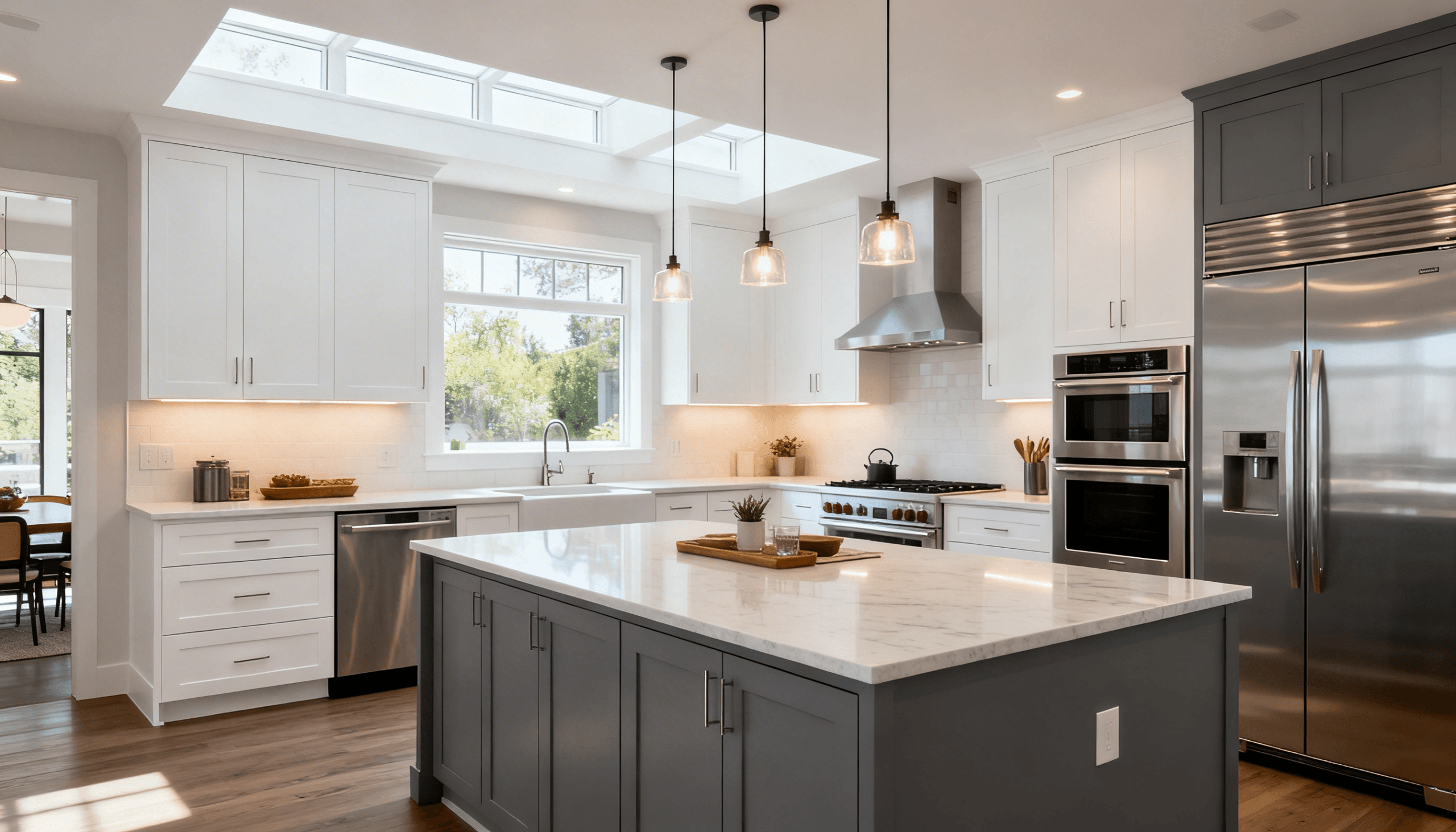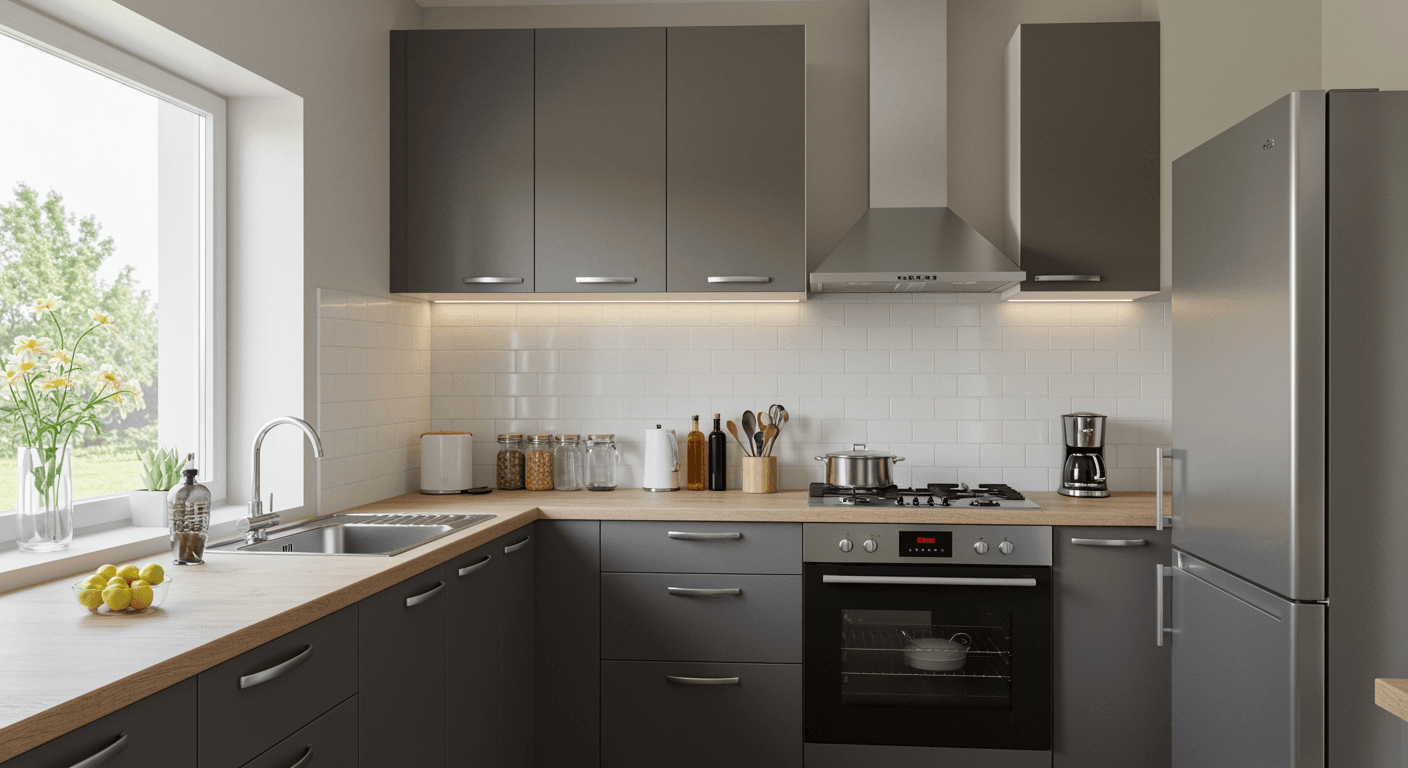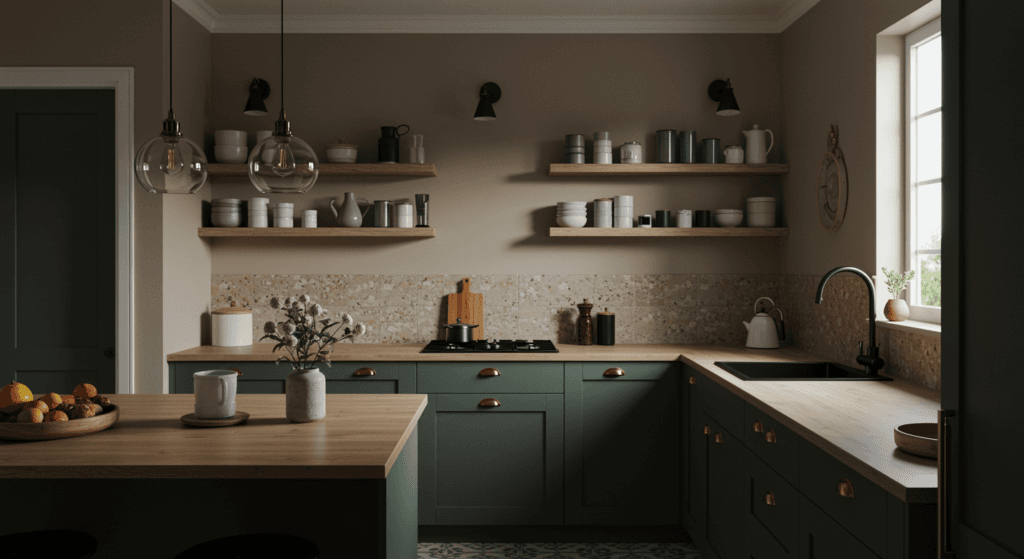

The psychological kitchen is a space where materials, colour, and design interact. The kitchen becomes simpler to negotiate and more enjoyable to use by giving clear surfaces, soft illumination, and creative storage top priority. The outcome is a peaceful, practical setting that promotes conscious cooking and daily comfort.
The Psychological Kitchen 1: Colour Psychology
Colour psychology sets the mood of a kitchen, therefore making The Psychological Kitchen very essential. Colours directly impact mood, stress level, and even how we see space which is especially critical in a room frequently associated with juggling many projects under strict deadlines.
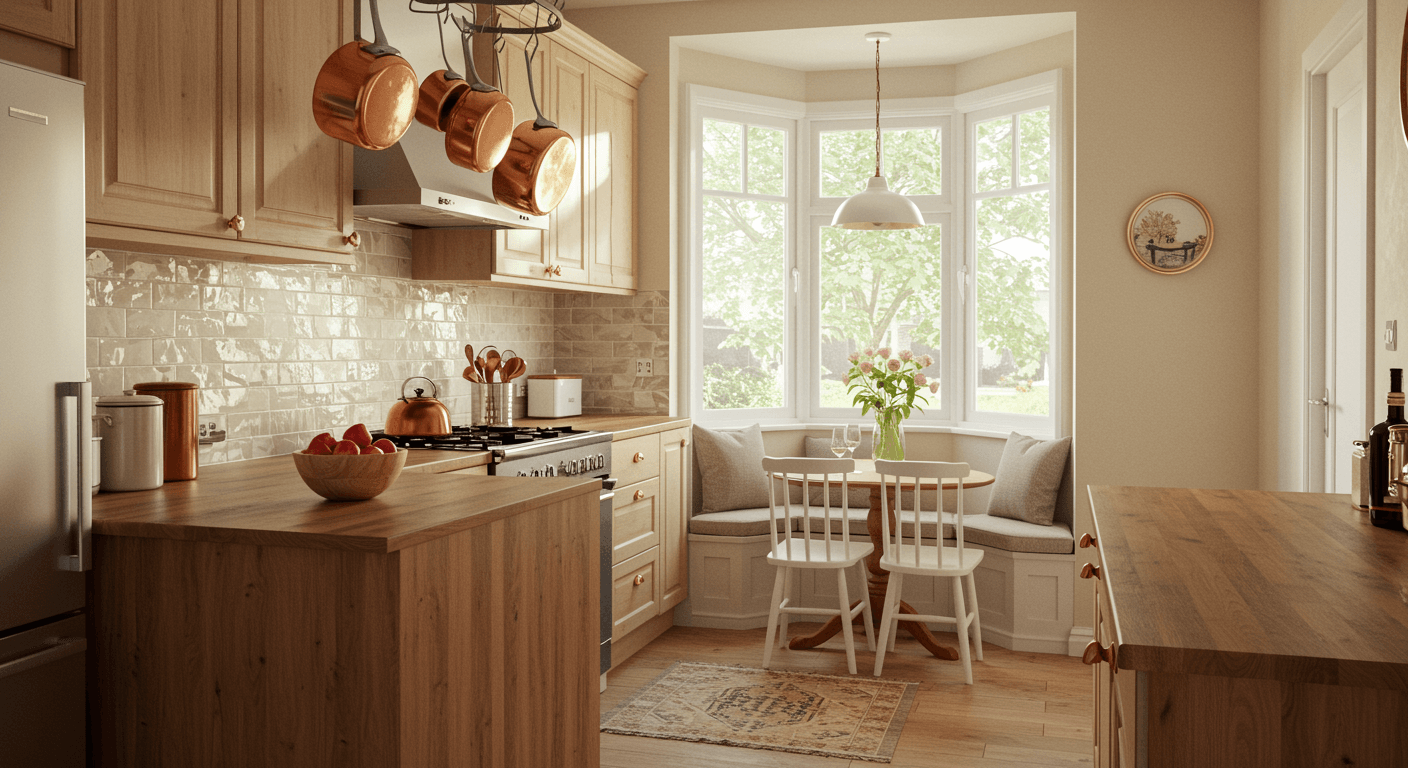
Gentle, understated colours — warm whites, taupe and light beige provide a neutral background that helps the brain to unwind and lowers visual clutter. These hues enable light to gently mirror and help the kitchen to be open, clean, and mentally stable. Cool hues like sage green, pale blue, or subdued eucalyptus especially well encourage quiet as they are mentally associated with peace and nature. They inspire order and so help to lower the heart rate, therefore reducing the hectic nature of cooking and increasing its organisation.
On the other hand, strongly saturated or bright hues such bold reds, neon yellows, or deep blacks can overcharge the senses, hence increasing strain and visual fatigue over time. Additionally important is judicious colour layering: matching muted wall tones with stone counters, natural wood cupboards, or matt finishes provides warmth without sensory overload. Pastel backsplashes or somewhat muted kitchen decor, even little colour accents can affect emotional comfort without upsetting equilibrium.
Essentially, a psychically serene kitchen calls colours that appear intended, muted, and coherent. Rather than just a functional area, selecting colours that foster relaxation above stimulus turns the kitchen into a calm environment that inspires focus, enjoyment, and emotional well-being throughout daily cooking routines.
The Psychological Kitchen 2: Clutter Control & Visual Order
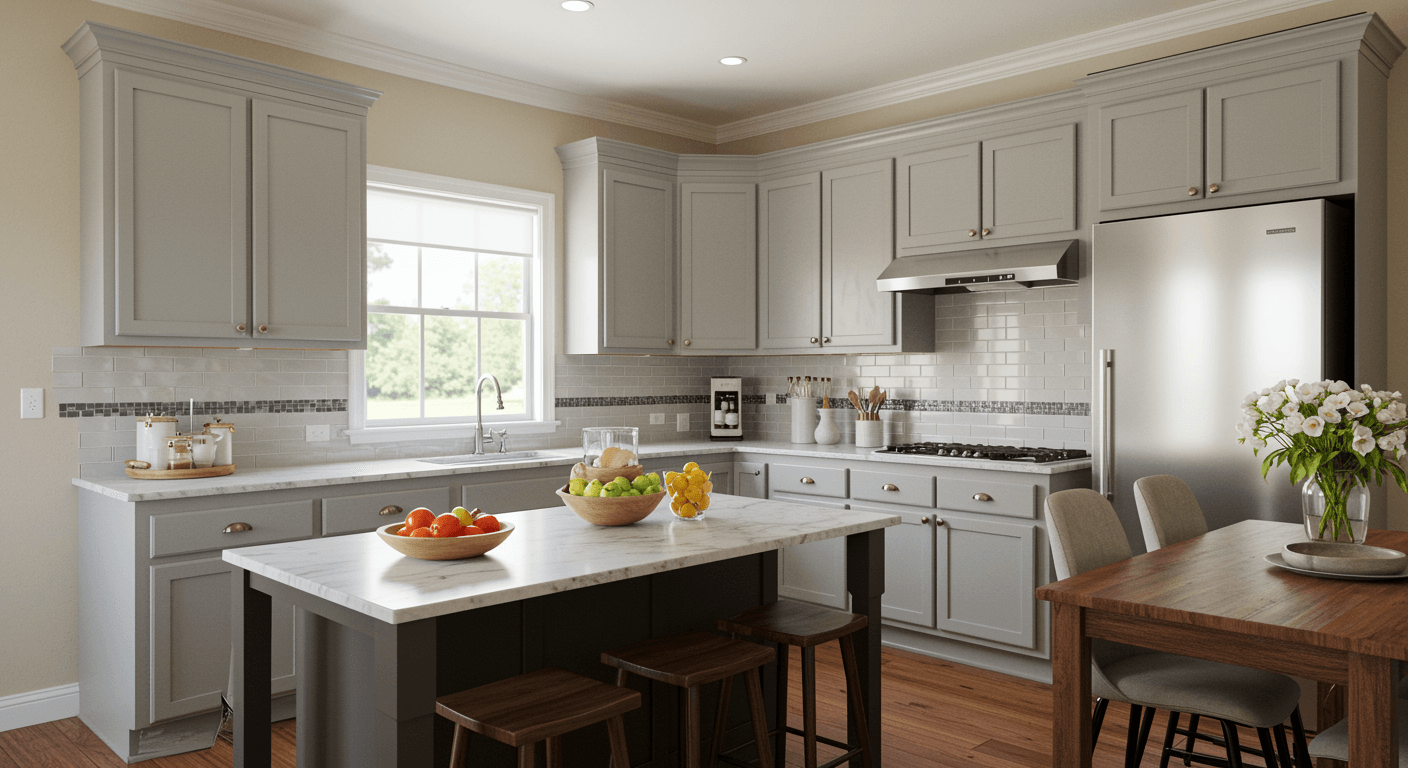
As too many visual stimuli may silently raise stress levels and impair attention, visual order and clutter management are very important in shaping the psychological experience of a kitchen. In a setting where several tasks take place simultaneously — prepping, cooking, cleaning, and socialising, a chaotic environment increases cognitive load and makes even basic tasks appear overbearing.
A mentally tranquil kitchen gives clever storage solutions first place to preserve clean surfaces and visible lines. Concealed cabinets, appliance garages, and integrated storage make it possible to conceal daily tools while still providing convenient access, so letting the mind to rest without continual visual distractions. Additional order comes from pull-out pantries, drawer dividers, and specified areas for ingredients and cookware, all of which guarantee that everything has a sensible location.
Equal significance is placed on visual consistency; coherent finishes, small colour contrasts, and modern hardware stop the eye from traveling from one component to another. Although open shelving can give personality, styling it deliberately and keeping it simple helps to prevent visual clutter. By restricting ornamental goods and needless appliances, one may help to clear counter tops and foster a feeling of control and room.
A well-ordered kitchen eventually helps clarity, efficiency, and emotional comfort by establishing a soothing mental atmosphere in addition to its aesthetic appeal. Planning for visual simplicity and intentional order transforms the kitchen into a healing haven where cooking seems like a deliberate, pleasant ritual rather than a daily duty.
The Psychological Kitchen 3: Mindful Layout & Zones
Vital components of the thoughtful design and clearly defined zones of the psychological kitchen are those that help to create a peaceful, natural, and stress-free cooking environment. By giving each task a dedicated location, precise zoning of a kitchen lets the brain focus on one activity at a time and so reduce mental clutter.
Typically, this includes separate meal preparation, cooking, cleanup, storage, and casual dining spaces. Linking complimentary characteristics including the sink, chopping surface, and rubbish bin inside the prep zone makes mobility more natural and efficient, therefore lowering unnecessary steps and annoyance. Psychologically, this feeling of flow is soothing because it mirrors the brain's preference for structure and predictability. Especially in family or shared kitchens, careful zoning helps prevent overcrowding.
Many people may work in various places without running across one another, hence lowering tension and sensory overload. Visually structuring the space with clear borders between regions aids emotional stability. For example, to distinguish each zone without compromising visual harmony, one might employ illumination, counter top materials, or minor cabinet modifications. Because it prevents the kitchen from seeming disordered or untidy, zoning is even more crucial in open-plan homes.
A well-ordered plan helps to finally improve mental health by means of decreased decision tiredness and physical stress. Cooking becomes a simpler, more conscious experience rather than a rushed or demanding task when everything has a suitable position and objective. An emotionally calming kitchen therefore needs design not only about looks but also about subtly guiding daily activities and fostering a sense of ease and control.
The Psychological Kitchen 4: Ergonomics & Flow
Essential components of the psychological kitchen are ergonomics and flow since they directly affect how peaceful, intuitive, and stress-free the culinary experience seems. A well-designed kitchen should move seamlessly with the user, hence minimising needless actions, ungainly motions, and physical tiredness that can rapidly turn meal preparation into a source of aggravation.
The classic work triangle linking the sink, stove, and refrigerator drives often an effective design at the heart of this idea. Daily activities seem more fluid and more predictable when these major components are arranged at reasonable distances. Correct counter heights are also quite important for comfort since over time, surfaces either too high or too low can stress the shoulders, back, and wrists. Thoughtful storage placement makes sure often used goods are within easy reach, while heavier or less-used items are kept at safer, lower levels, hence improving flow.
Adequate distances between countertops, islands, and hallways enable for free movement, hence avoiding the sensation of being jammed in or rushed. Giving each activity a particular location, clear task zones for cooking, cleaning, storage, and preparation help to lessen decision tiredness. Thoughtfully designing ergonomics and flow transforms the kitchen into an area promoting natural movement and mental clarity.
This perfect interaction between body and surroundings promotes a sense of control and simplicity, therefore turning the kitchen into a relaxing, practical environment where cooking seems less like work and more like a deliberate, pleasant ritual.
The Psychological Kitchen 5: Intentional Minimalism
By lowering overstimulation yet still maintaining warmth and character, intentional minimalism creates a psychically quiet kitchen. Unlike extreme minimalism, which may seem cold or useless, deliberate minimalism emphasises only maintaining what is beneficial, helpful, and typically used.
Little increase decision fatigue and anxiety from visual clutter in a kitchen including overstuffed countertops, mismatched appliances, or too much decoration. Homeowners can create a brighter, more ordered, spiritually healing environment by deliberately choosing tools, kitchenware, and furniture. Keeping visual consistency keeps the mind focused and relaxes the eyes; clean lines, handle-less cabinets, and hidden storage help.
On open shelving, a limited number of items like ceramic bowls or glass jars — both lovely and useful are shown. Deliberate material choices are also supported by intentional minimalism; hence, matte finishes, soft textures, and consistent colour schemes are favoured to reduce visual interference. Every design component serves a specific purpose in minimising pointless interruptions during food preparation and cooking.
By making daily activities seem more straightforward and more natural, this technique helps to soothe irritability in a hectic environment and so clarify feelings. At last, by aligning decor with everyday activities, a deliberately basic kitchen guarantees the surroundings promotes simplicity, comfort, and emotional harmony — that is, converts the kitchen from a place for cooking into a refuge for intentional living.