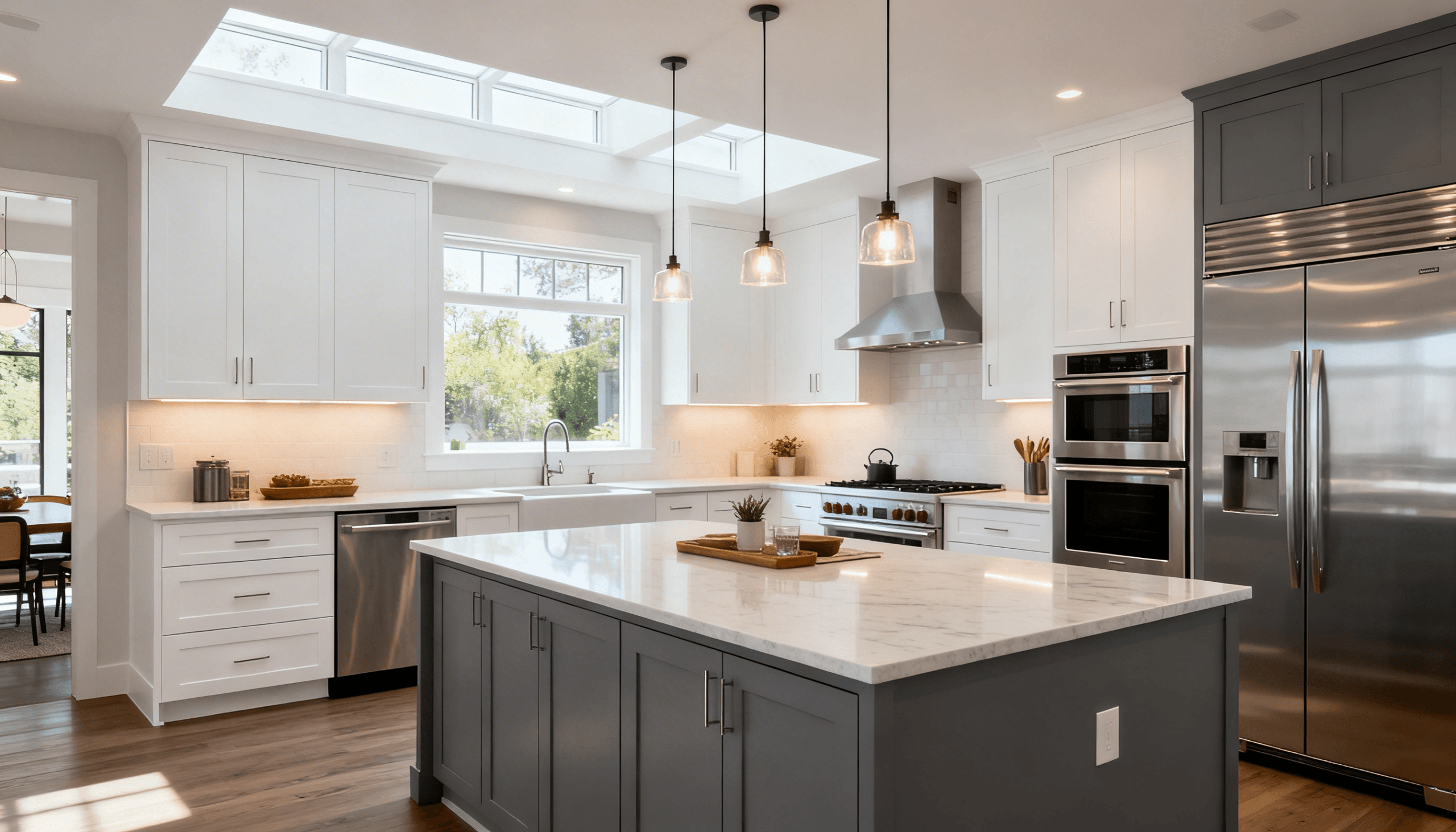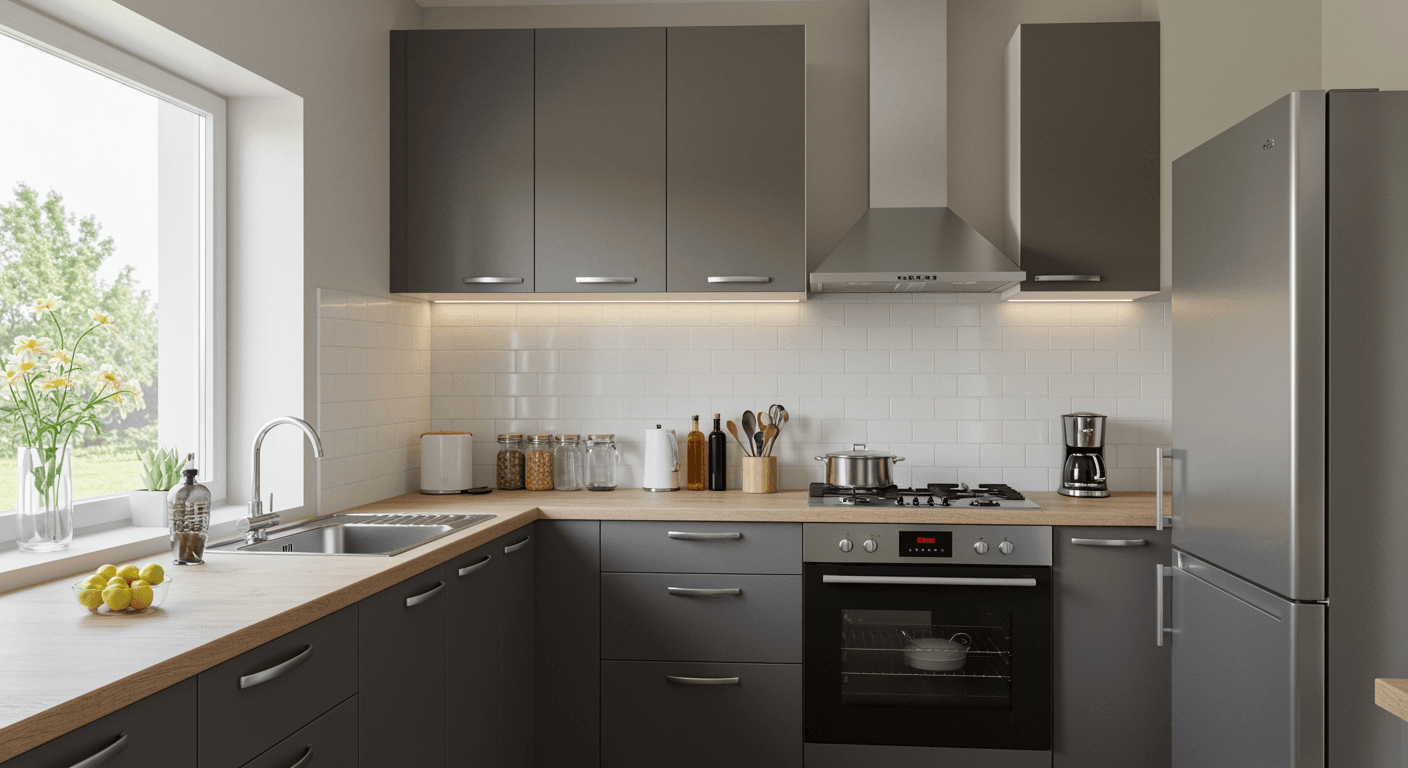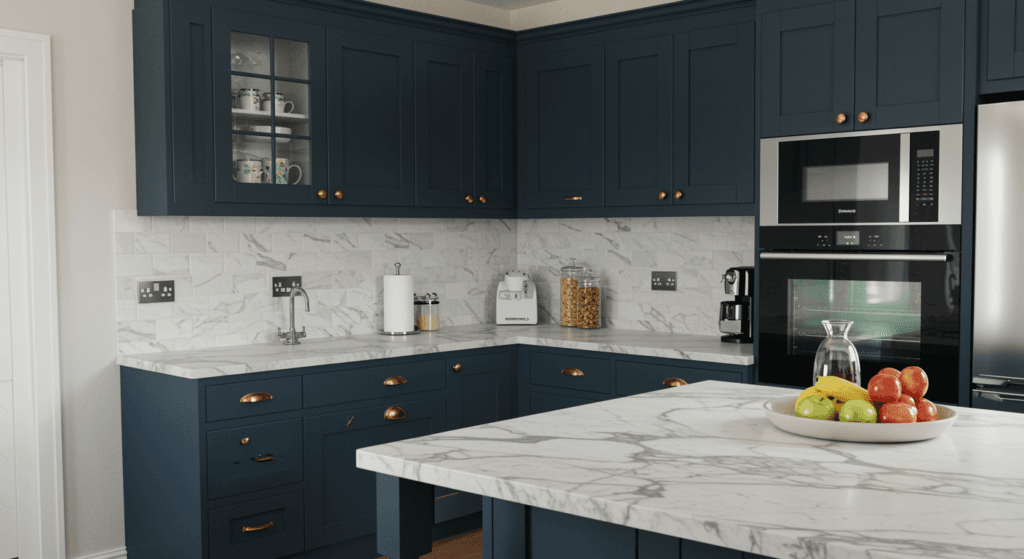

Kitchen island wow factor starts with colour since it swiftly changes the island into a strong centrepiece in the kitchen. The appropriate hue boosts the general design by providing depth, contrast, and personality without overpowering the room. Carefully chosen colours also improve visual harmony, giving the kitchen a more deliberate, sophisticated, and memorable feel.
Kitchen Island Wow Factor 1: Creates a Visual Focal Point
Colour improves the wow factor of a kitchen island especially when it acts as a visual focal point. Many modern homes especially ones with open-concept layouts focus around the kitchen rather than a secret office.
Grabbing attention, an ideal island hue provides a great visual reference inside the surroundings. Whether it be a deep navy, a rich forest green, a warm terracotta, or even a soft pastel, a coloured island sets the pecking order of the kitchen decor and separates itself from nearby cupboards. Especially in kitchens largely in neutral tones like white, beige, or grey, this contrast avoids boredom or plainness.
Beyond appearances, highlighting the centre of the kitchen where food, cooking, and social interaction all take place helps to clarify geographically. Colour helps the island stand apart without overwhelming the surroundings, hence giving influence without too much decoration or means. Moreover enhances surrounding surfaces, therefore adding more theatrical look to stone counters, more depth to wood textures, and more elegance to metallic fixtures.
The hue of the island transforms into a statement that seems deliberate rather than fashionable, therefore properly grounded the whole kitchen design. Using colour to establish a visual focus, homeowners may transform the kitchen island into a stunning central feature, therefore reinforcing its significance as the true centre of the house and enhancing both use and beauty.
Kitchen Island Wow Factor 2: Defines the Kitchen’s Personality
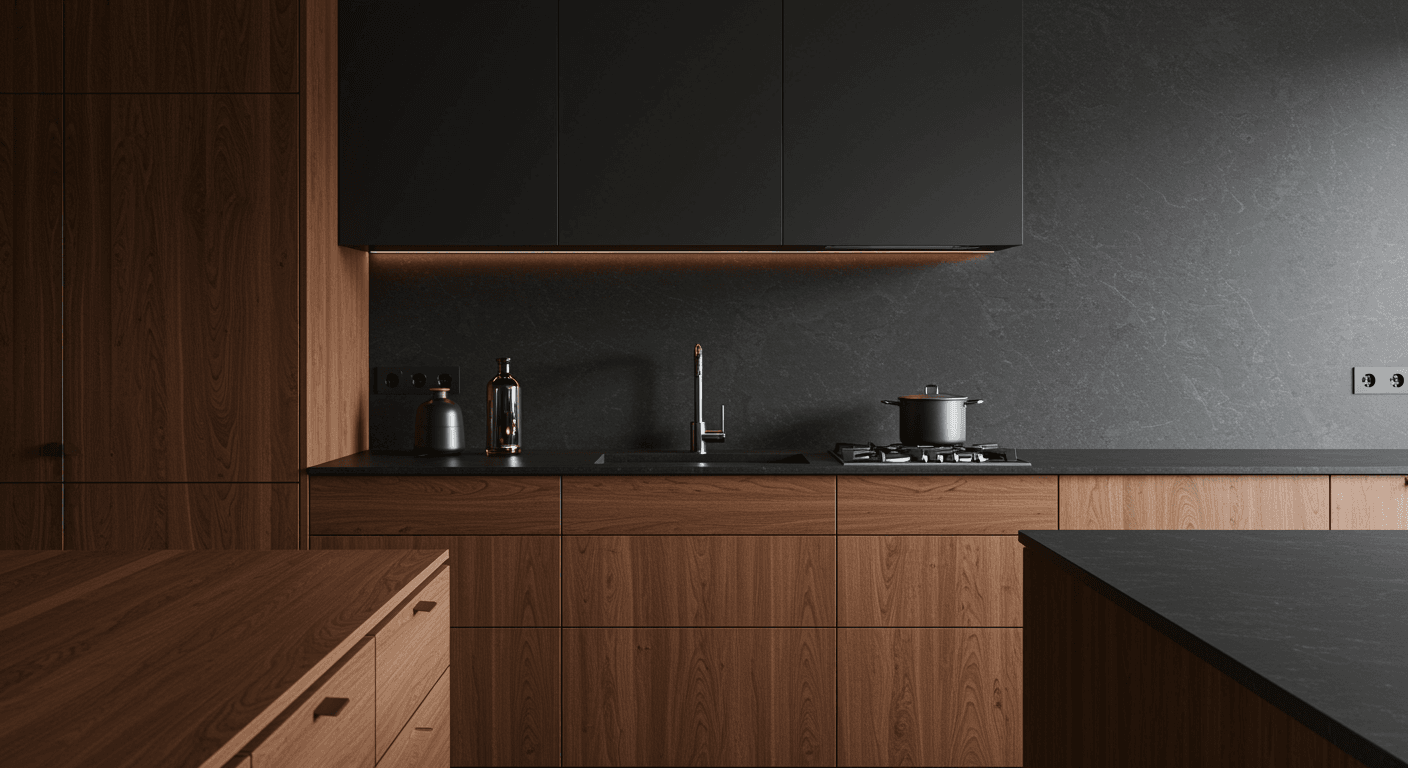
Colour which defines the mood of the kitchen is among the most crucial aspects affecting the wow factor of a kitchen island. Usually setting the emotional mood for the whole kitchen, the island is a prominent and highly visible element.
A great island colour quickly conveys confidence and independence by changing the environment from only utilitarian to extremely expressive. Dark tones like navy blue, charcoal, or forest green express elegance and contemporary sophistication, hence producing a sophisticated ambiance that feels purposeful and carefully selected. Softer colours such gentle pastels, cream, or light grey evokes a peaceful, friendly character that seems classic and family-centred.
Aside from black and white, the chosen colour reveals how the kitchen should be viewed. Warm neutral hues like terracotta, taupe, or beige provide hospitality and simplicity, hence converting the island into a natural meeting and supper spot. Vibrant or uncommon colours, on the other hand, indicate innovation and a willingness to experiment — ideal for homeowners who view the kitchen as a social and expressive area instead than merely as a desk.
Whether that be calm and comfortable, contemporary and sleek, or strong and design-driven, the island's colour can also serve as a toned statement of lifestyle. Usually associated with dining, cooking, and social events, the colour of the kitchen island comes to reflect the personality of the house. Although colour makes the island seem distinct, it also documents its people instead of depending on just furniture or commodities; it has a quick, emotional impact.
Kitchen Island Wow Factor 3: Enhances Spatial Perception
Colour is a key component in designing a kitchen island wow factor as it really helps to develop spatial perception. Even if the actual design is unchanged, the right island tone can surely affect how open, roomy, or balanced a kitchen seems.
Lighter island colours like soft whites, muted greys, or warm neutrals reflect light in smaller kitchens, therefore preventing the island from appearing large or oppressive. This encourages honesty while letting the island organically merge with its surroundings while still preserving its character. Alternatively, deeper or darker island colours can give larger kitchens foundation and visual weight. The setting is defined by hues like charcoal, deep green, or navy, hence guaranteeing the island does not go missing in a grand scheme.
Colour also adds depth by the contrast between the island and nearby cupboards, which softly marks zones without actual limits. This contrast is especially crucial for open-plan homes as it helps to clearly delineate the kitchen yet keeps a consistent flow with adjoining living or dining areas. Colour can also alter proportions physically. For an island, darker colours combined with vertical grain patterns could help to produce a taller and more sophisticated appearance.
Thus proving that colour is more than just ornamental but rather a calculated design tool shaping how a space is viewed, homeowners can purposely utilise colour to affect visual scale, increase harmony, and create a kitchen looking properly proportionate, functional, and aesthetically appealing.
Kitchen Island Wow Factor 4: Highlights Materials and Finishes
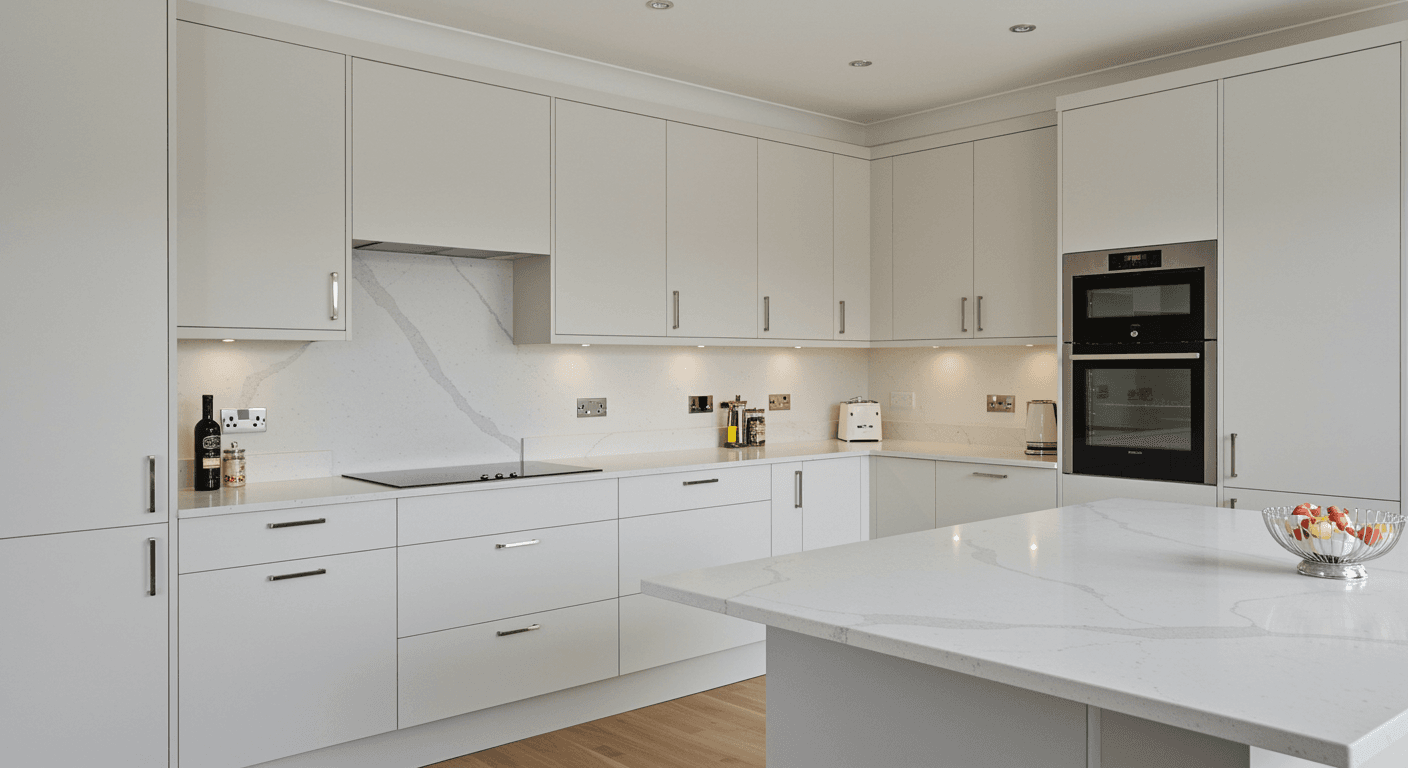
Emphasising materials and finishes depends on colour, therefore it much raises the wow factor of the kitchen island. Selecting the right colour will accentuate natural features by emphasising their textures, designs, and workmanship.
Deep navy, charcoal, or forest green islands, for example, highlight marble or quartz surfaces and hence emphasise vein features otherwise ignored. Lighter island tones like pale beige, warm grey, or off-white highlight intricate stone patterns and provide a perfect, elegant appearance. Dark-toned islands draw emphasis on the depth and warmth of natural wood grains; colour adds more depth to wood surfaces.
Lighter tones emphasise a more contemporary design. Island colour also features metal elements and hardware. With contrasting cupboard hues, matte black, brushed brass, or champagne gold handles seem more dramatic hence instantaneously improving sophistication. The matte, satin, or gloss of the finish affects the general mood of the kitchen by interacting with colour to change how light reflects over the surface.
While a brighter gloss finish reflects light and increases brightness, a matte, darker island tone offers a grounded, polished appearance. Designers can create a spectacular but harmonic core by exactly matching materials and finishes to the island tint. Besides meeting a basic demand, this careful preparation ensures that the kitchen island develops into a stunning decorative feature that enhances the general look of the kitchen.
Kitchen Island Wow Factor 5: Elevates Perceived Value
Choosing the right kitchen island colour will much enhance the perceived worth of a kitchen and quickly give the space a more polished and upscale impression. Unlike conventional cabinets that disappear into the background, a purposely painted island shows intended design and personalisation, two attributes usually linked to premium houses.
A strange but muted colour on a kitchen island suggests it was thoughtfully designed rather than constructed from normal components. The layers and depth this visual contrast adds to the whole area support to enhance professionalism and beauty in design. Dark, rich hues like navy, charcoal, or deep green often convey luxury and durability even while muted neutrals like grey or warm taupe reflect traditional elegance appealing to a broad range of homeowners.
Better seen value may come from brighter or gentler colours together with materials by offering a custom, painstakingly selected appearance. Colour may draw notice to beauty by highlighting remarkable finishes, flawless joinery, and exquisite lines that would otherwise go unnoticed. When paired with suitable hardware, lighting, or countertops, a coloured island is a remarkable aspect that improves the entire kitchen without becoming oppressive.
From the perspective of a buyer, this level of design complexity evokes a well-kept, professionally updated property. Ultimately, the proper kitchen island colour converts a functional component into a focal point by subtly underlining quality, style, and long-term value — all of which are vital ingredients for producing a strong and lasting wow factor in modern kitchen design.